Best Pickleball Paddles Under $50 for Beginners (2026)
The short version
Joola and Selkirk are the two biggest names in pickleball, and both now sell a paddle that lands just under $50. Walking onto your neighborhood court with either one feels good. That is a real thing and I am not going to pretend otherwise. But neither of those two specific paddles is built for the person most likely to buy them: a brand new player, or somebody who plays a couple of times a month for fun.
My pick under $50 is still the Friday Original. I will walk you through why, and I will show you the price math honestly, because it only works as a two-pack.
Affiliate disclosure: This article contains affiliate links. If you buy through them, Limitless Pickleball may earn a commission at no extra cost to you. Our link also takes $10 off. All prices are as of August 2026 and can change at any time.
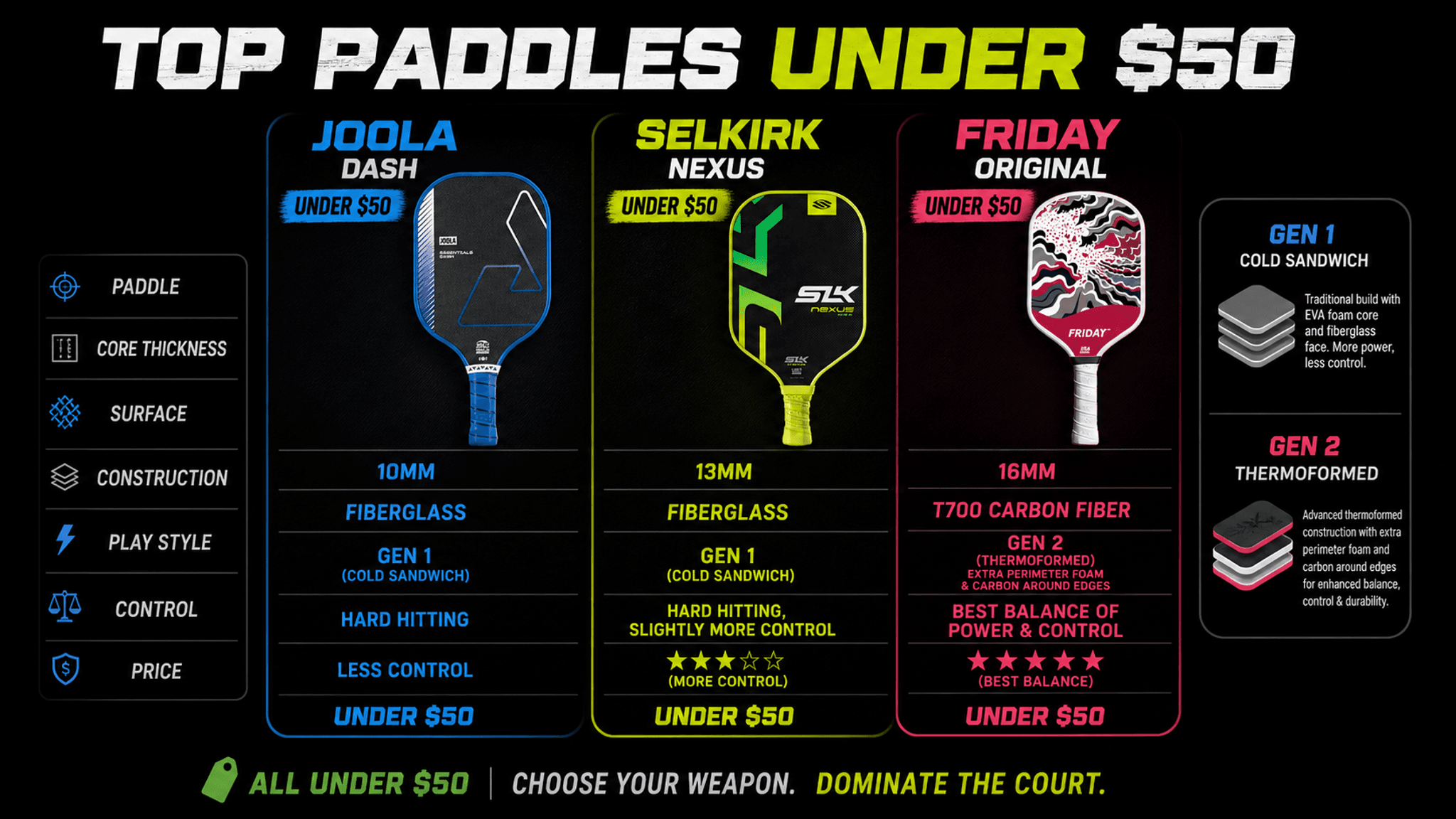
The two big names, and what they actually built
Let me be fair up front. Joola and Selkirk both make excellent paddles. I have hit with plenty of them and I recommend several of their models. The problem here is not brand quality. It is fit. These two paddles were built to hit a price point, and the way they hit that price point works against the exact shots a beginner is being taught.
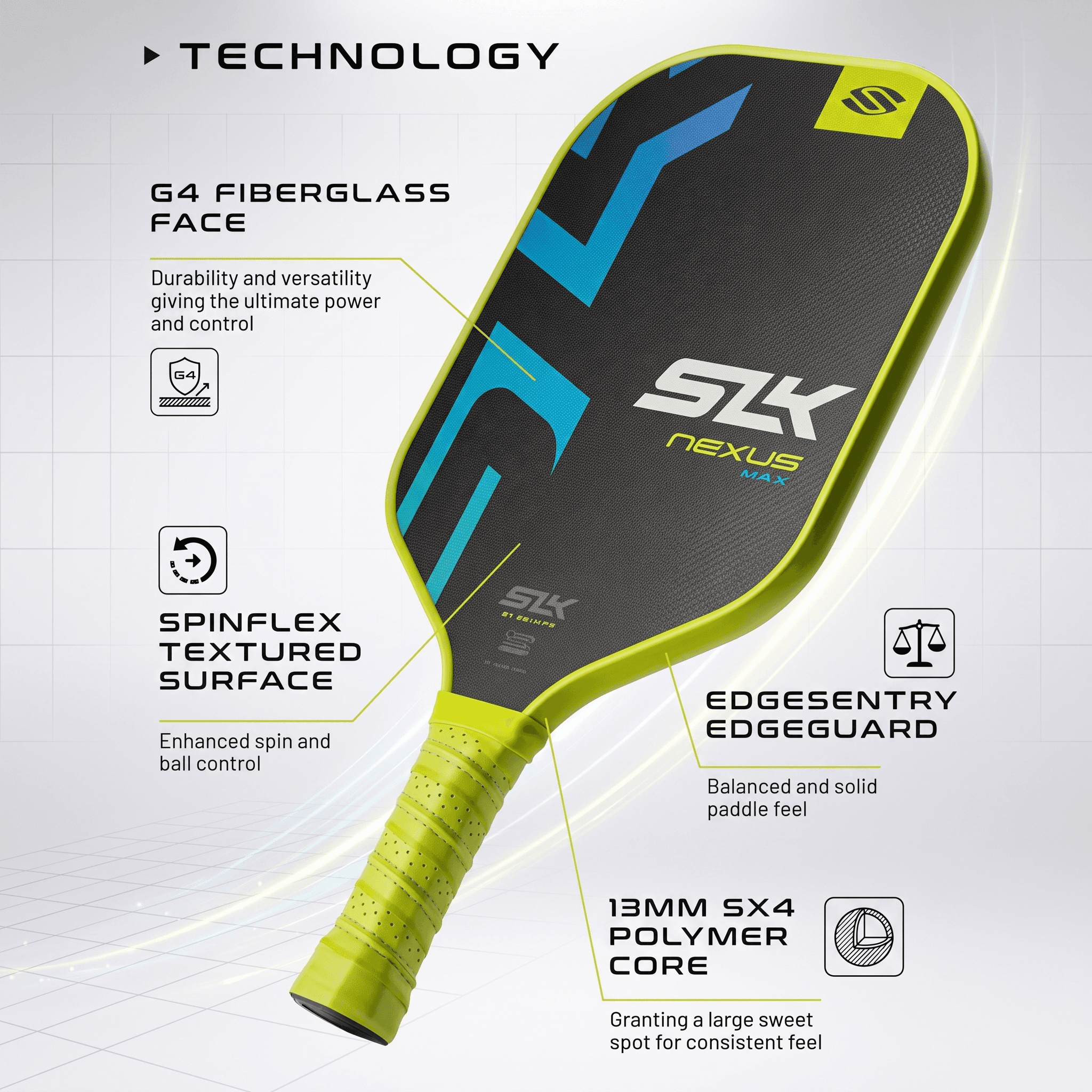
Selkirk SLK Nexus Max, $49.95
A 13mm SX4 polymer core with a G4 fiberglass face and a textured surface. Selkirk built this one honestly. The edge guard is low profile, the grip is comfortable, and it is not going to fall apart on you. It has pop. If you already swing hard and you like a firm paddle, you will enjoy hitting with it.
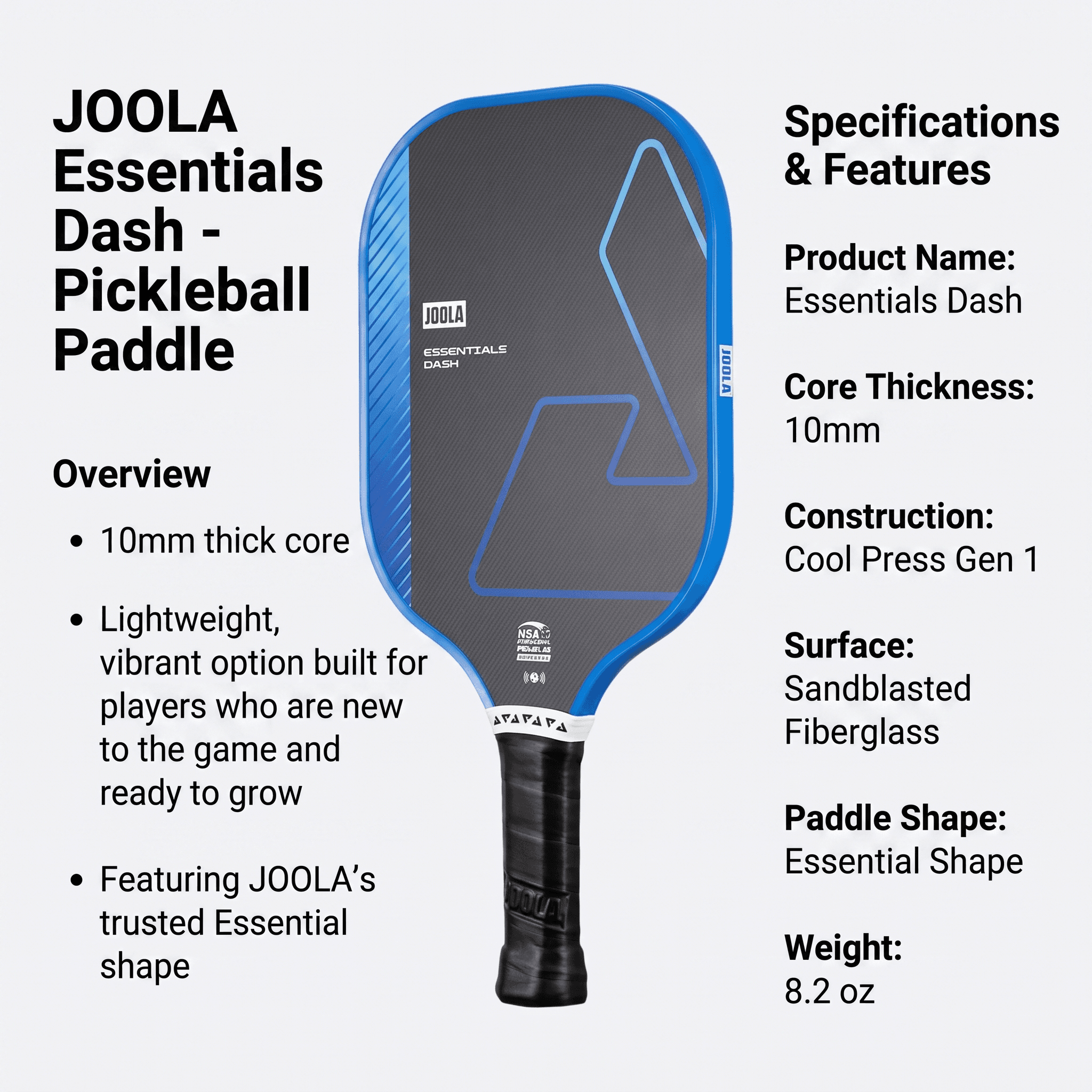
Joola Essentials Dash, $49
A 10mm polymer core with a sandblasted fiberglass face. Joola is upfront about the design intent in its own product copy: the fiberglass surface flexes more than carbon on contact, creating rebound for powerful returns. That is an accurate description of what the paddle does. It is also a description of a paddle built around power.
Of the two, I think the Dash is the harder sell for a new player, and it comes down to one number. Ten millimeters is close to half the thickness of a 16mm core. Whatever you gain in pop, you hand back in touch.
Why core thickness matters more than the logo
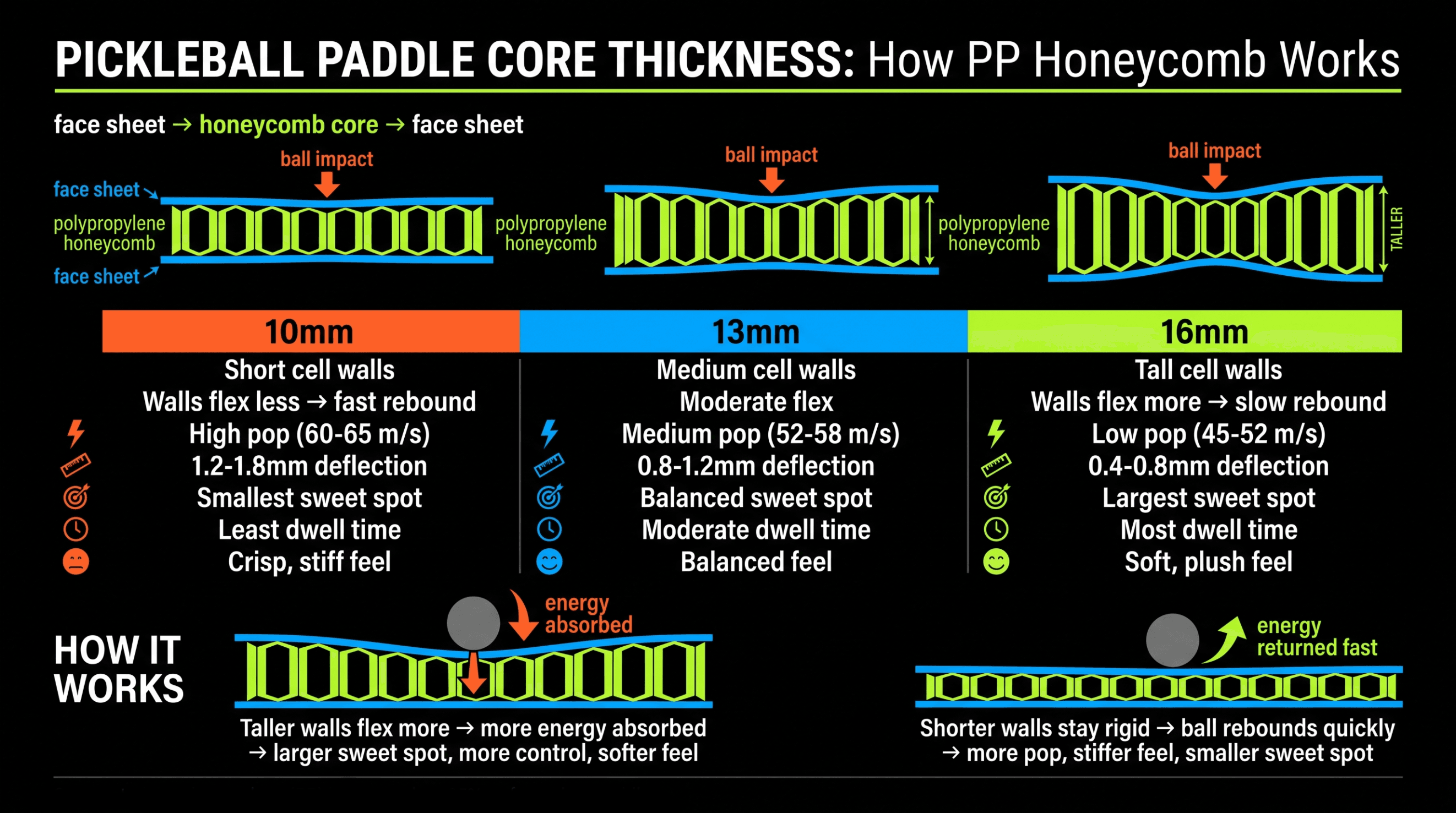
Here is the part nobody explains at the store. The core is the polypropylene honeycomb sandwiched between the two faces, and its thickness decides how the ball behaves when it lands.
A thin core barely deflects. The ball meets a nearly rigid surface and leaves fast. That is great when you want to end a point. A thicker core deflects more, holds the ball on the face a fraction longer, and gives you a window in which you can actually steer it. That window is what players mean when they say feel.
According to the core-thickness diagram below, a 10mm core sends the ball out around 60 to 65 m/s, a 13mm core around 52 to 58 m/s, and a 16mm core around 45 to 52 m/s. That is not a ranking of good to bad. It is a ranking of fast to controllable. Now ask what your coach has you working on in week three: dinks, drops, resets, placement, direction. Every one of those is a control shot. Not one of them is helped by a ball that leaves the face before you can influence it.
Thicker cores also spread the sweet spot and add dwell time. That is a quieter benefit but a real one, because on an off-center hit a thick core is far more forgiving. Beginners hit off-center a lot. So do I.
The fiberglass question, and why it keeps showing up in cheap paddles
Both of those paddles use a fiberglass face. I want to explain that carefully, because "fiberglass is old technology" gets repeated a lot without anyone saying what it actually means for your game.
I started playing about six and a half years ago. Fiberglass was on the way out and graphite was on the way in. I switched to a graphite paddle and the difference was immediate. My dinks got better, my lobs got better, my drop shots got better. Not because I improved overnight, but because I could suddenly feel the ball on the face. Fiberglass by comparison is stiff. Hitting a soft shot with it feels like swinging a 2x4. There is very little give in it.
Fiberglass face technology is roughly eight to ten years past its prime, and there is a pattern behind that:
- 1984 to about 2005: fiberglass is the only composite face on the market.
- About 2005 to 2018: fiberglass and graphite coexist.
- About 2013 to 2021: painted carbon arrives alongside both.
- 2021 onward: raw T700 carbon fiber becomes the competitive standard.
- 2024 onward: Kevlar shows up as a durability alternative.
Fiberglass tracked that curve exactly. Top tier from 1984 to 2010, mid tier from 2010 to 2018, lower-mid from 2018 to 2022, and from 2022 on it has been the default face on $30 to $80 starter paddles.
That is the lifecycle every paddle material follows. A material launches as premium. Pros adopt it and spin tests validate it. Factories scale production and the price falls. A newer material launches as the premium option. The old one gets pushed downmarket and becomes the starter-paddle default.
So fiberglass in a 2026 sub-$50 paddle is not a scam. It is a material at the end of its lifecycle, sold at a price its age justifies. The catch is who ends up holding it. The beginner buys the cheap paddle, and the beginner is the player who needs touch the most. That is backwards.
My pick under $50: the Friday Original
I have been making this argument for about four years, and it started by accident. Students kept showing up to lessons with the Friday Original. I hit with one and it surprised me. Then they told me the price and it surprised me more.
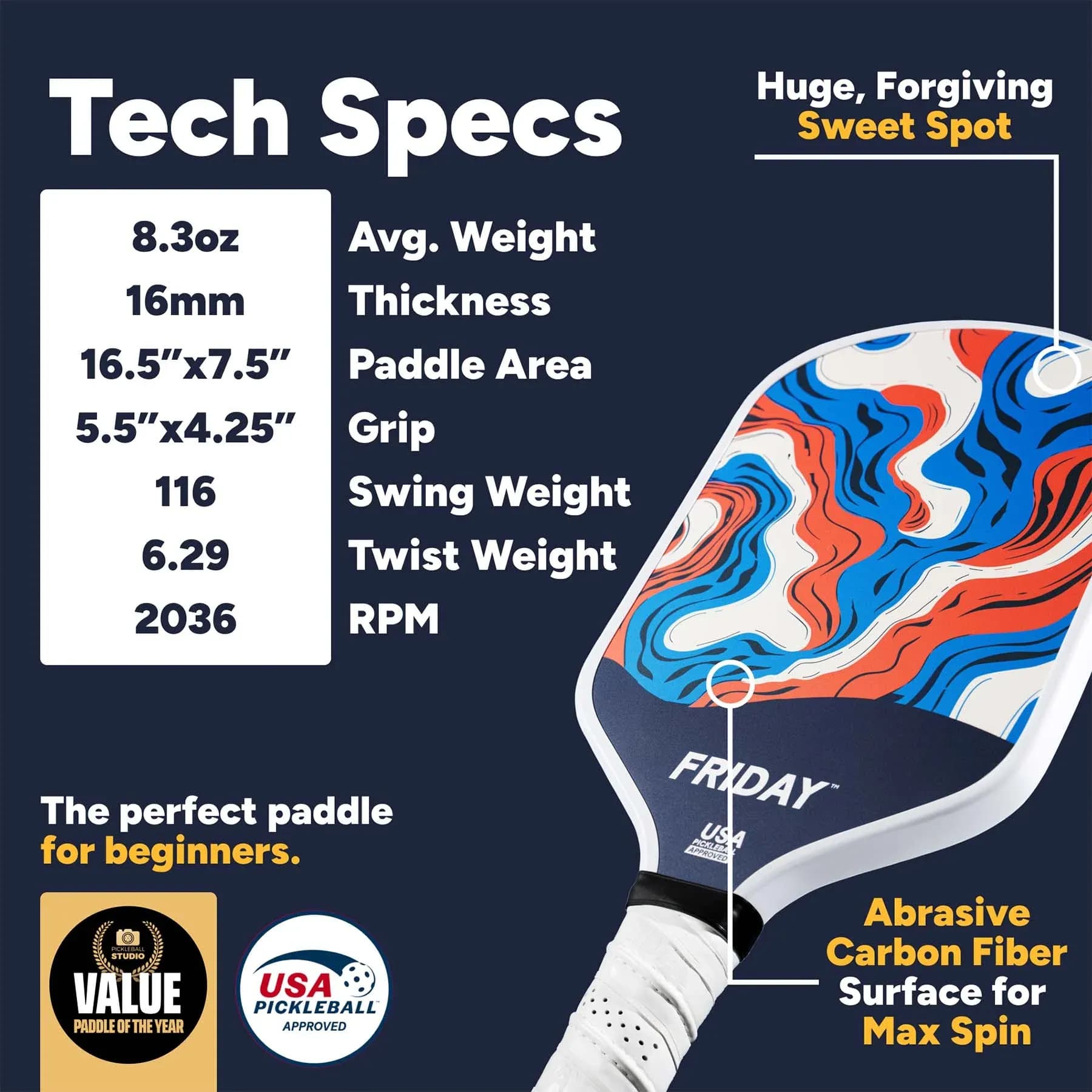
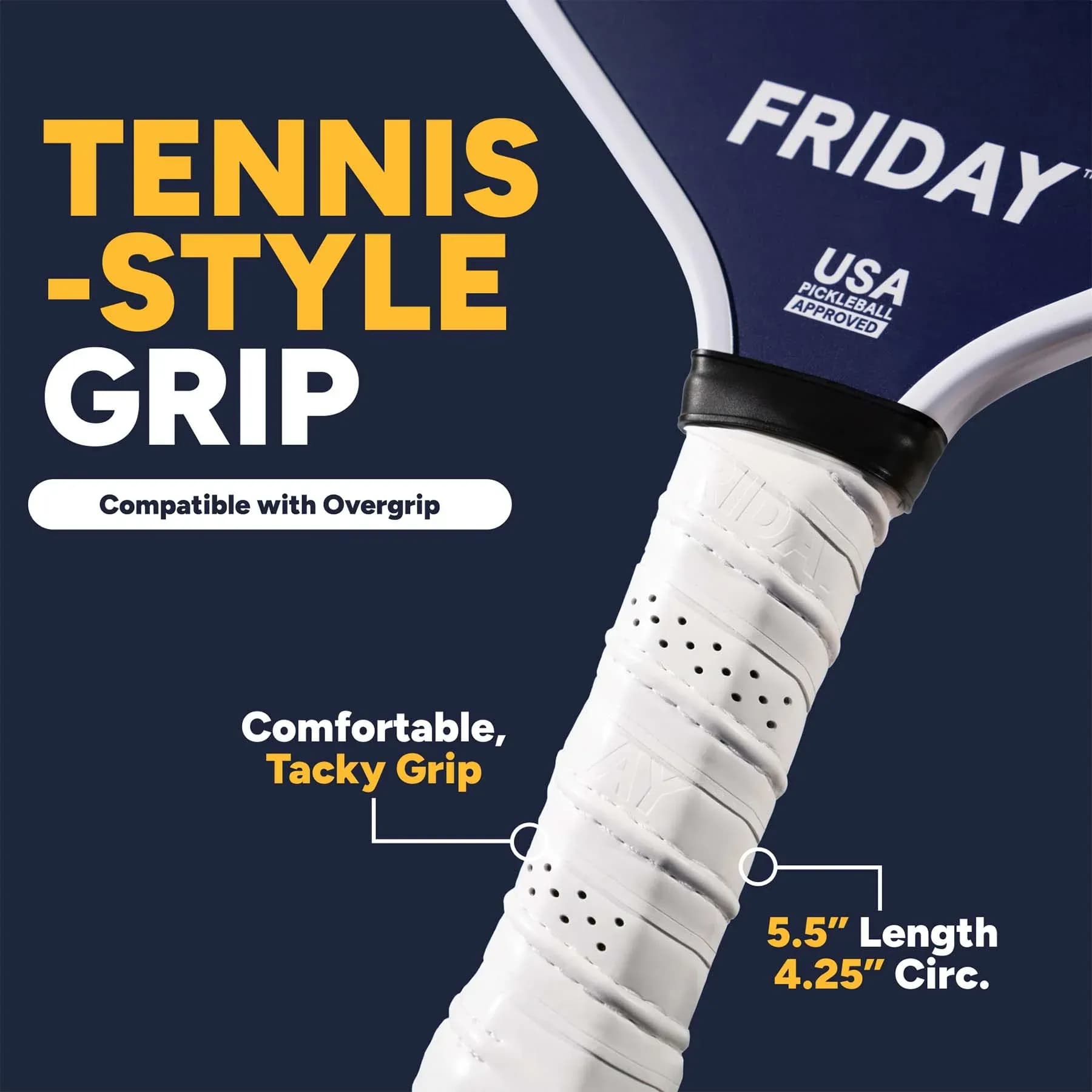
Here is what is in it. A 16mm polypropylene honeycomb core, an abrasive carbon fiber face with sprayed-on grit, and Gen 2 thermoformed construction with foam-injected walls. That is the same recipe you find in paddles at three times the price, executed at an entry-level spec.
The grit matters as much as the core does. Carbon plus a sprayed abrasive surface is what puts spin on the ball, and Friday publishes a spin test of 2,036 RPM. For a paddle in this bracket that is a genuinely useful number, because spin is how you keep a drive from sailing and how you make a dink drop instead of float.
The price, told straight
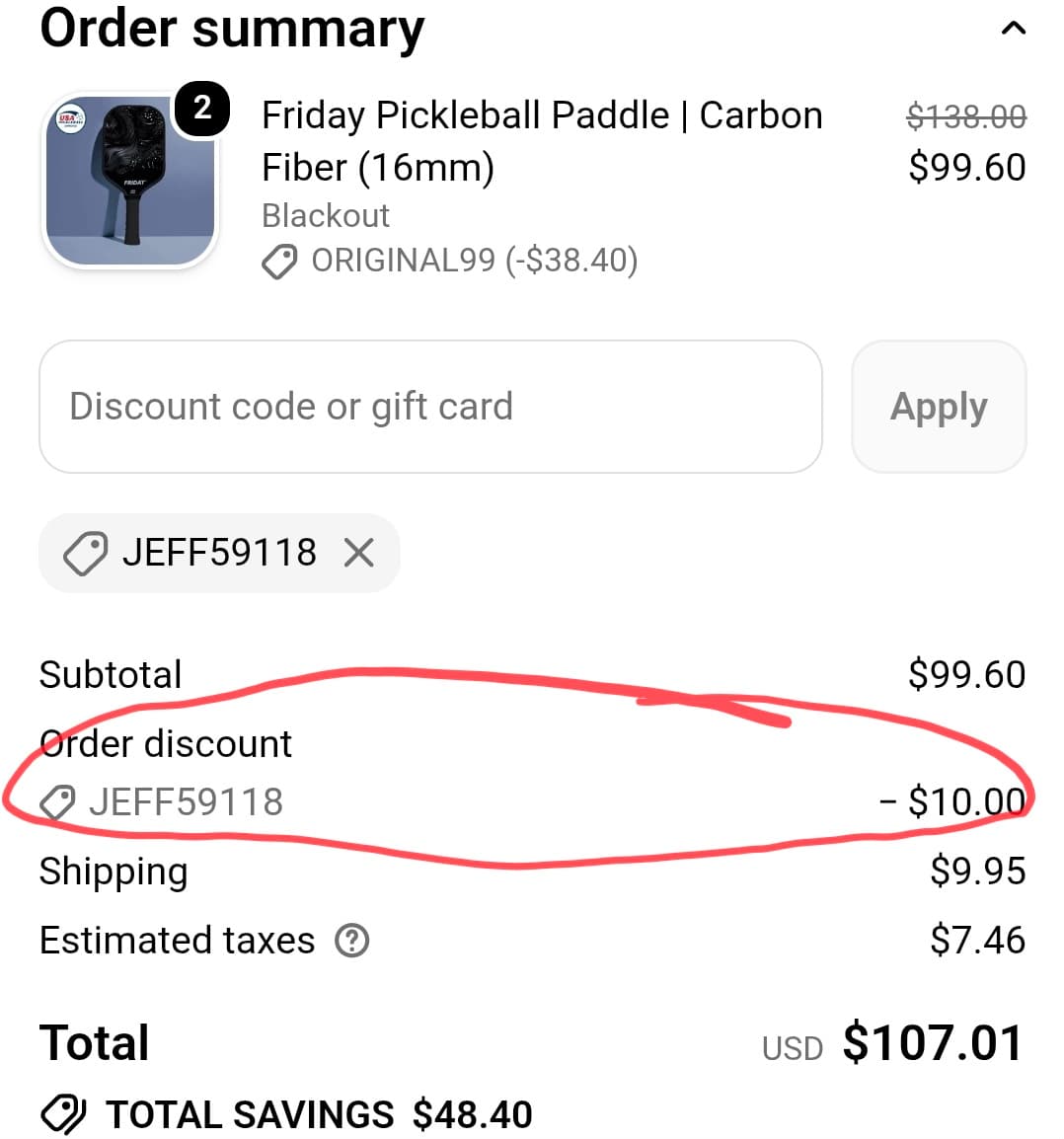
The Friday Original is sold as a two-pack for $99. Our link takes another $10 off, which puts you at $89 for two paddles, or about $44.50 each. That is the under-$50 math, and I want to be clear about it: a single Friday Original is not sold for under $50 on its own. The per-paddle price works because you are buying two.
Which, for the buyer I am talking to, is usually what you want anyway. Take a Friday to a neighborhood court and somebody notices the design and asks what it is. Now you have a spare to hand them. Or you are starting out with a spouse, a partner or a good friend, and you need two paddles regardless. If you genuinely only need one paddle and will never need a second, this is the fair place for me to say the math does not work as well for you.
Prices as of August 2026, and they move. Confirm before you buy.
Get the Friday Original two-pack
Two paddles for $99, less $10 through our link, so about $44.50 each. Price and stock as of August 2026 and subject to change.
Check the current Friday Original priceGen 1 versus Gen 2, and what that does not mean
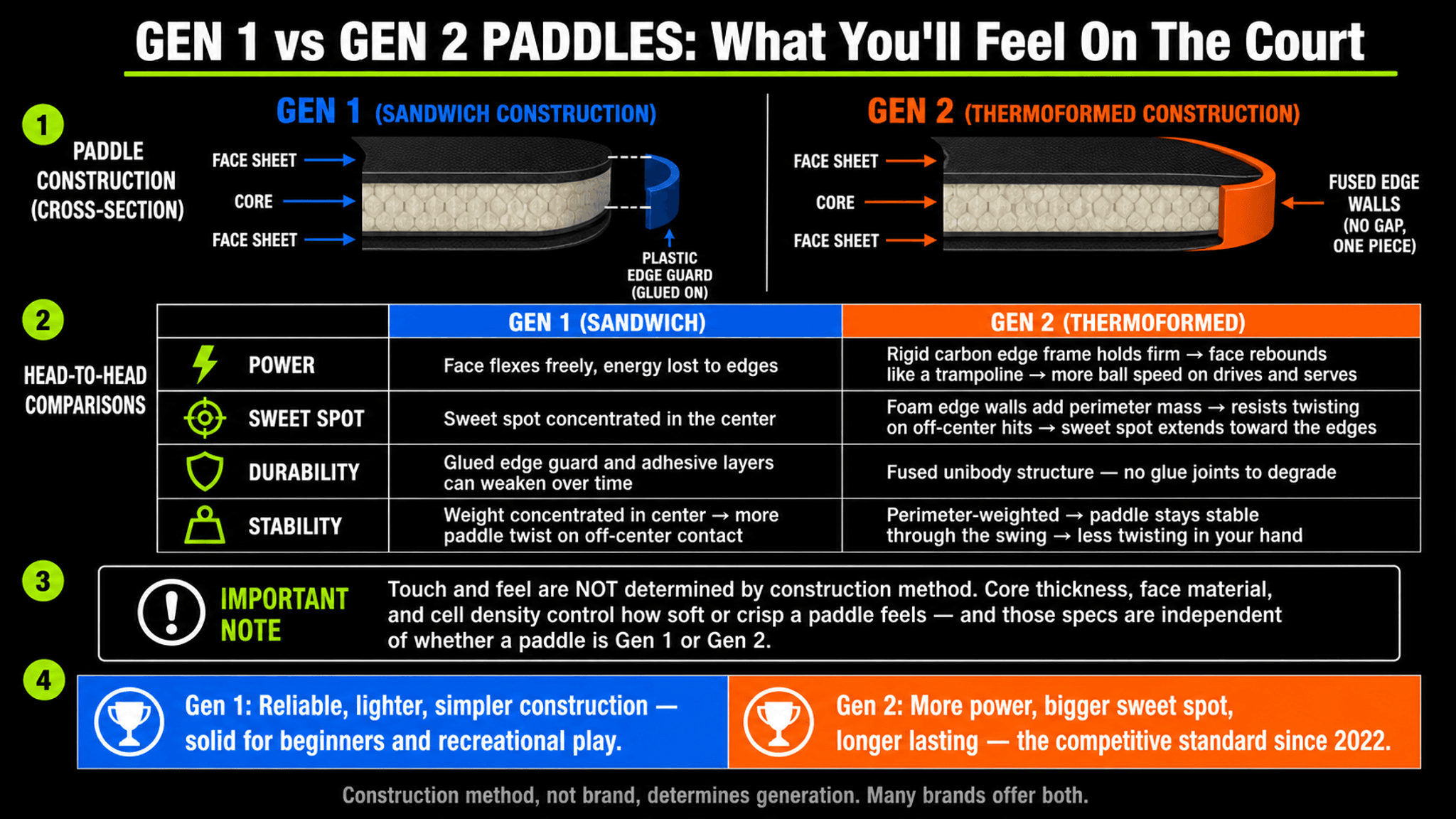
The Dash and the Nexus Max are both Gen 1 paddles. The Friday Original is Gen 2. It is worth knowing what that describes.
Gen 1 is sandwich construction. The core and the faces are bonded together, then a plastic edge guard is glued around the perimeter. Gen 2 is thermoformed. The carbon face wraps down and fuses into the edge walls so the frame is one bonded unit, usually with foam injected into those walls. The practical results are a stiffer frame, better torsional stability, more power off the same swing, and a larger effective sweet spot.
One caveat I want to flag, because it gets misused constantly, including by people selling paddles: construction method does not determine touch and feel. Core thickness, face material and cell density control feel, independent of whether a paddle is Gen 1 or Gen 2. Gen 2 does not mean softer. The Friday Original feels controllable because it is 16mm with a carbon face, not because it is thermoformed. What thermoforming buys you is durability and stability.

Returns and warranty, including what is not covered
This is the part I always read out loud, because the honest version is more useful to you than the marketing version.
The 99-day return policy is real, and it is qualified. The paddle has to come back in almost-like-new, playable condition. It exists so you can hit with the paddle a few times, decide it is not for you, and send it back. It is not a 99-day free trial for a paddle you have put serious hours on. If the face is worn smooth and the grip is shot, that return is not going through.
There is also a 6-month warranty covering manufacturer defects that are clearly visible in a photo or video. That includes a handle breaking, a loose or cracked edge guard, face cracks, rattling, and disbonding or delamination.
What the warranty does not cover: normal wear and tear from play, graphics wearing or fading, rattling that does not affect performance, paddle abuse or neglect, and damage caused by hits to the ground. That last one catches people. Scraping the paddle on concrete reaching for a low ball is on you, not on Friday.
I lay all that out because I would rather you know the limits now than discover them at the return window. And for what it is worth, I have Friday Originals that are four and five years old that I still hand to beginner students, and they still hit well.
Two paddles, 99 days to change your mind
The Friday Original two-pack is $99, and the Limitless link takes $10 off, so $89 for two. Prices as of August 2026 and subject to change.
Check the current priceWhere you go next, when you are ready
Not for your first paddle. For the day you notice you are playing four or five times a week instead of twice a month.
Friday Fever, $89 to $99
A Gen 3 paddle. It adds a layer of foam around the perimeter, which expands the sweet spot and adds dwell time and snap. You get a little more pace without losing the control. For the money, I still think it is one of the best paddles on the market.
Friday Aura Pro, $169 less $10, so $159
A Gen 4 paddle with an all-foam build. The advantage of all-foam is that it does not break down the way foam-injected walls eventually can. This is a serious paddle, priced well under the comparable Joola and Selkirk flagships.
Both are worth knowing about, and both are the wrong first purchase. Learn the soft game on a 16mm control paddle first, then graduate.
When you are ready to graduate
The Friday Fever and Aura Pro sit above the Original. The same link applies the $10 discount across the lineup. Prices as of August 2026 and subject to change.
See the Friday lineup with the discountPlacement over power
That is the whole argument in three words. It is not how hard you hit it, it is where you hit it. A paddle that helps you put the ball where you meant to put it will win you more games at 3.0 than a paddle that helps you hit it harder into the net.
Joola and Selkirk are good companies making good equipment, and I want to be clear that this is not a knock on either brand. If you are a stronger player looking for a firm, fast backup paddle under $50, either of these two will do a job for you. But if you are learning the game, or you play for fun a couple of times a month and you want the ball to land where you aimed, get the thicker core and the carbon face. Under $50, that is still the Friday Original.
Two paddles, about $44.50 each
The Friday Original two-pack with our $10 discount applied. 99-day returns in almost-like-new condition, plus a 6-month defect warranty. Pricing as of August 2026.
Get the Friday Original