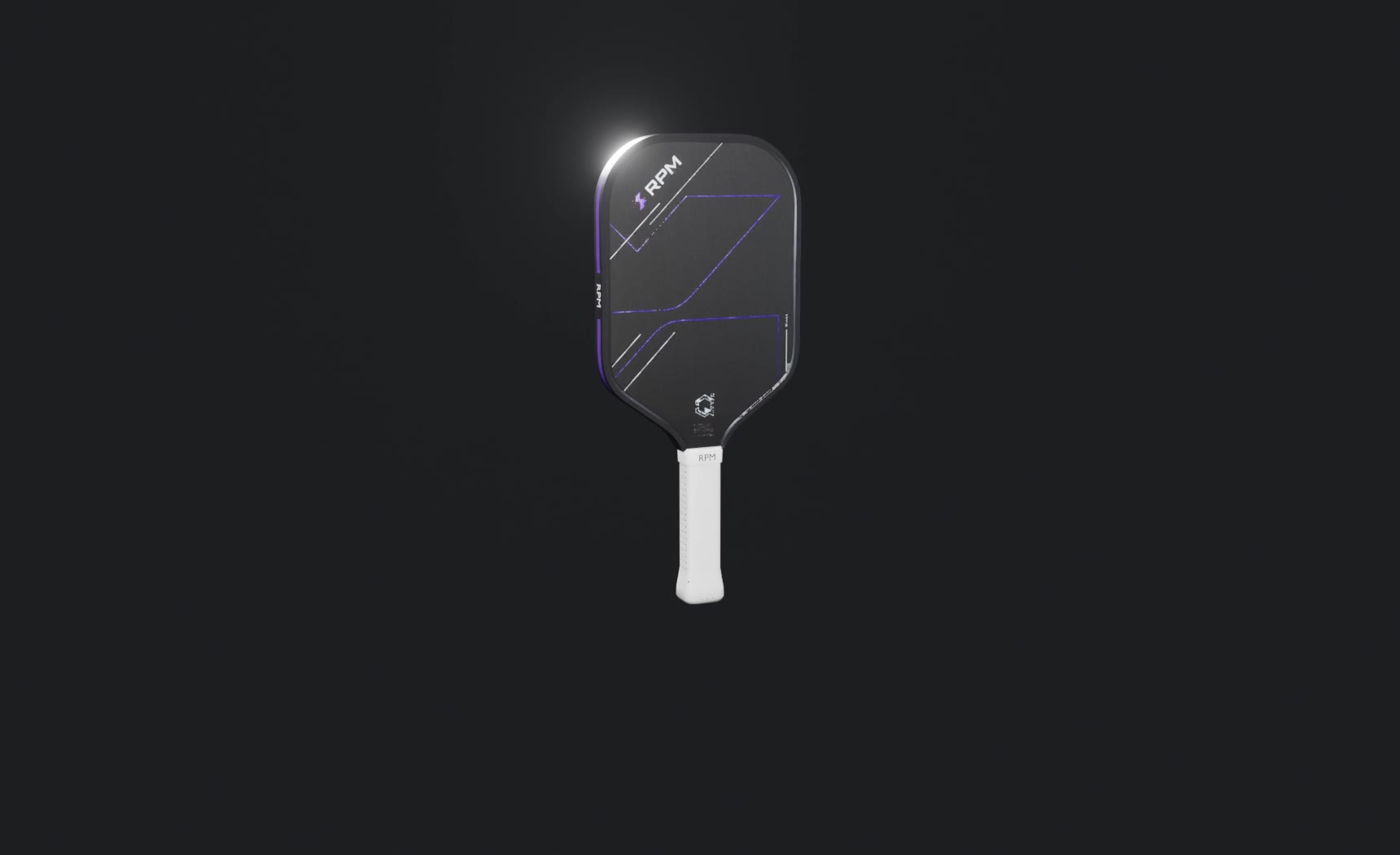
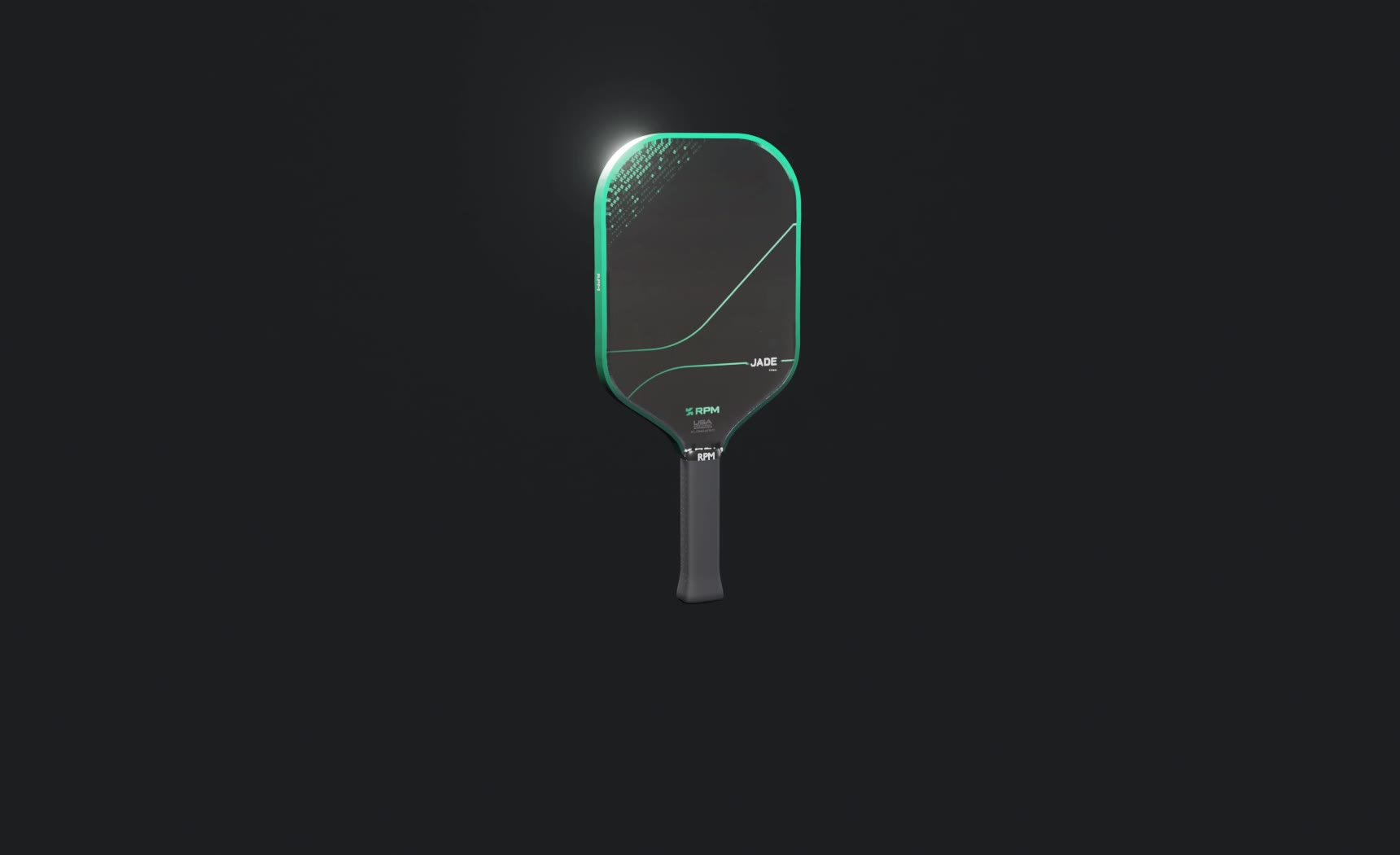
RPM Jade vs RPM Q2: Same Specs, Different Paddle
The short answer
RPM’s Q2 and the new RPM Jade are almost identical on paper. Same shape, same weight, same handle. But hit a ball off each one and they don’t sound the same... and that sound tells you a lot about how they play.
Bottom line? If you want power and a little extra pace on your drives, go with the Q2. If you want better touch, better resets and better dinking, or you’ve got a softer game you want to keep going, go with the Jade.
I’ve been playing with both. Below I’ll take you inside each paddle with our exploded 3D diagrams, then walk through the sound test, the spin test and what the two surfaces look like under a microscope.
Save on the RPM Jade or RPM Q2
Our discount link gets you an extra 15% off either paddle (about $40). Use code COACHJEFF at checkout. Price, stock and discount terms can change.
Check Price & Use Code COACHJEFFSame on the outside, different on the inside
Both paddles have a 5.5 inch handle, and neither one is heavy. For those of you worried about tennis elbow, 7.8 ounces is considered a light paddle. If you only read the spec sheet, you’d flip a coin.
Don’t flip the coin. The differences come with the BUILD. Scroll through each one below and watch it come apart layer by layer.
RPM Q2: multi-zone EPP full foam
The Q2 is a full foam paddle with a molded EPP core that has different zones inside it, each made to do a different job. It has TPU inserts in the perimeter, TPE inserts in the neck, and a CarbonBite carbon face. Stay with it to the end of the scroll for a look at core density, mapped from an X-ray of the paddle.
RPM Jade: MPP floating core with an EVA ring
The Jade is also full foam, but it’s a floating MPP foam core with a soft EVA foam ring around the outside, and RPM’s new SICmatrix silicon carbide face on top.
One of my favorite paddles is a Gen 3 paddle. I love the feel of them. The problem is they had that core crushing issue, early on in some models and a little later in others. With full foam you’re not going to get that.
Here’s the thing... the Jade is built more like a Gen 3 paddle. It has that ring around the outside and the MPP foam in the middle, and it FEELS more like one. If you like Gen 3 paddles, the Jade is the one I’d go with.
Playability: power vs touch
The Q2 is designed more as a power paddle. It has a little stiffer feel and a higher pitched sound. When I’m having a good driving day, I can hit it hard and it’s really dipping because of the spin, and I get a little extra pace on it because of the build.
With the Jade I can’t hit quite as hard. I’m talking a difference of maybe 5 to 7%. That’s not a big drop off at all. What I’m gaining is dwell time, plus a better spin pattern. I can hit down on a ball, I can hit flicks, and it’s bending just a little bit more.
The sound test: why the Jade sounds so different
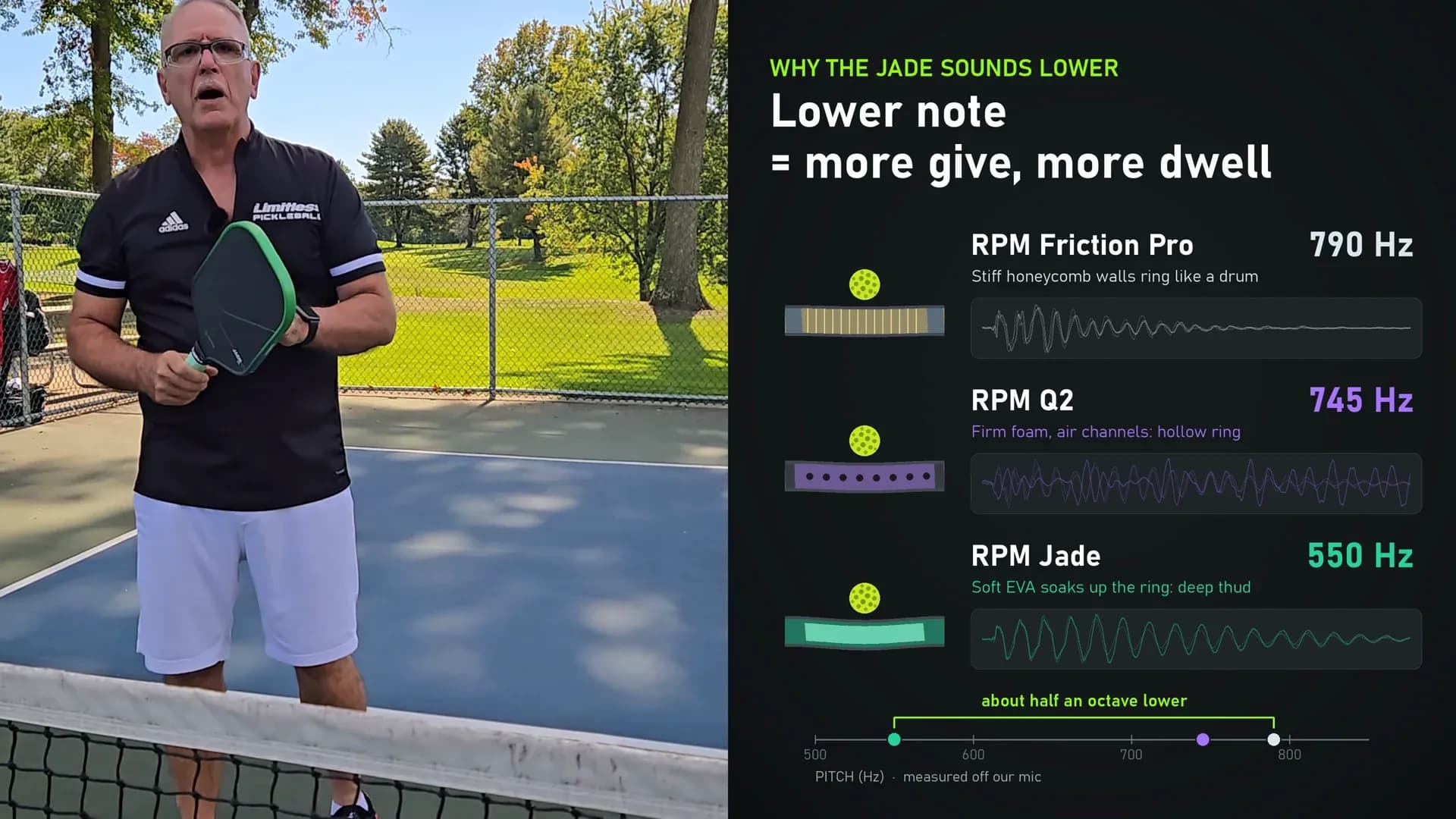
You hear a lot about dwell time. Here’s the simple version... typically, the deeper the sound you get off the paddle, the more dwell time you’re getting. The ball stays connected to the face a little longer.
So I bounced a ball off three RPM paddles and measured the pitch off our mic. The original RPM Friction Pro came in around 790 Hz. The Q2 was a little more hollow but about the same at 745 Hz. Then the Jade... way down at 550 Hz. That’s a big difference you can hear without any equipment.
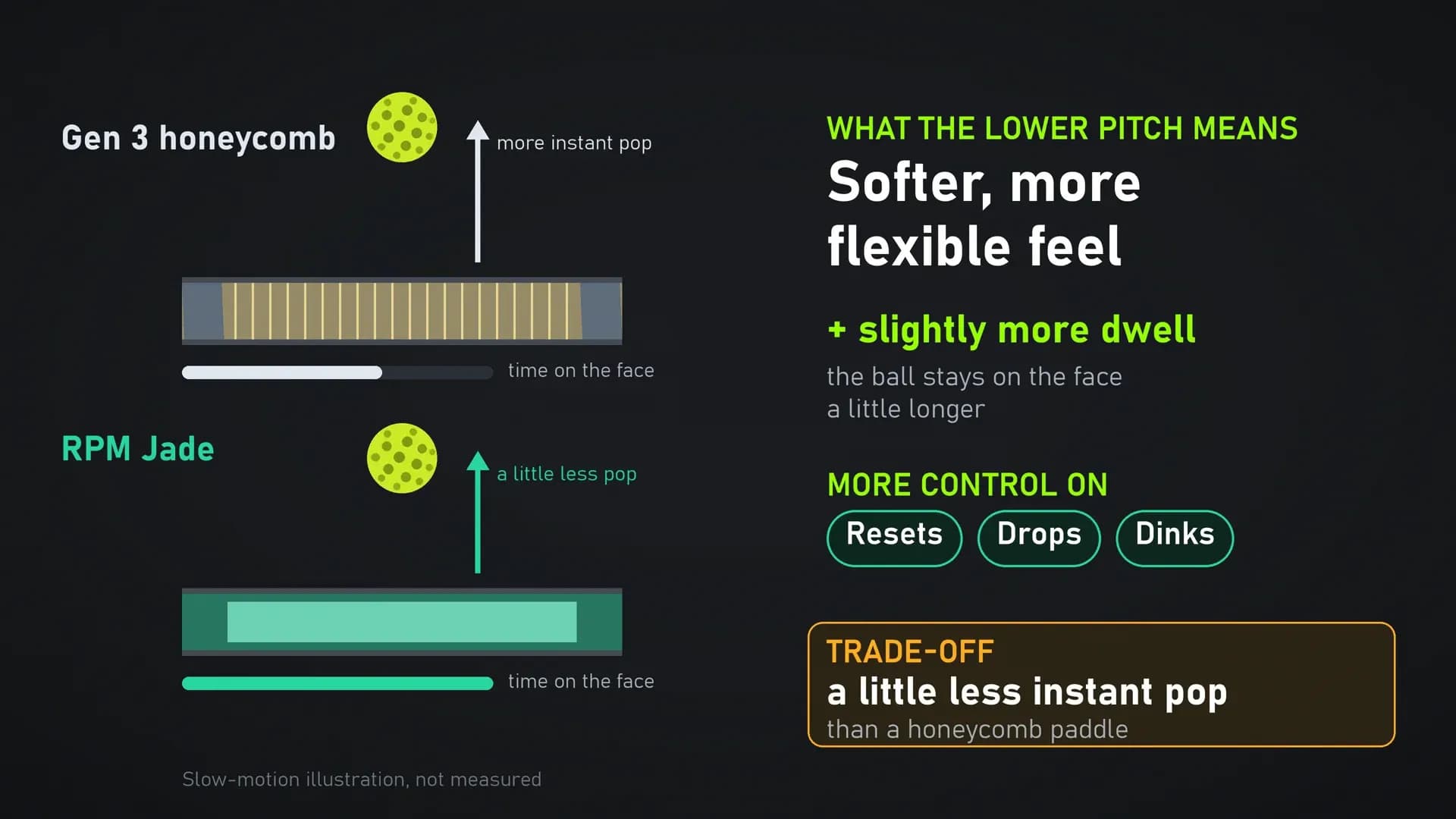
What does that mean on the court? The Jade’s lower pitch points to a softer, more flexible feel with slightly more dwell time. That can help you on resets, drops and dinks. The trade-off is you may get a little less instant pop than you would with a honeycomb paddle.
Will it heat up?
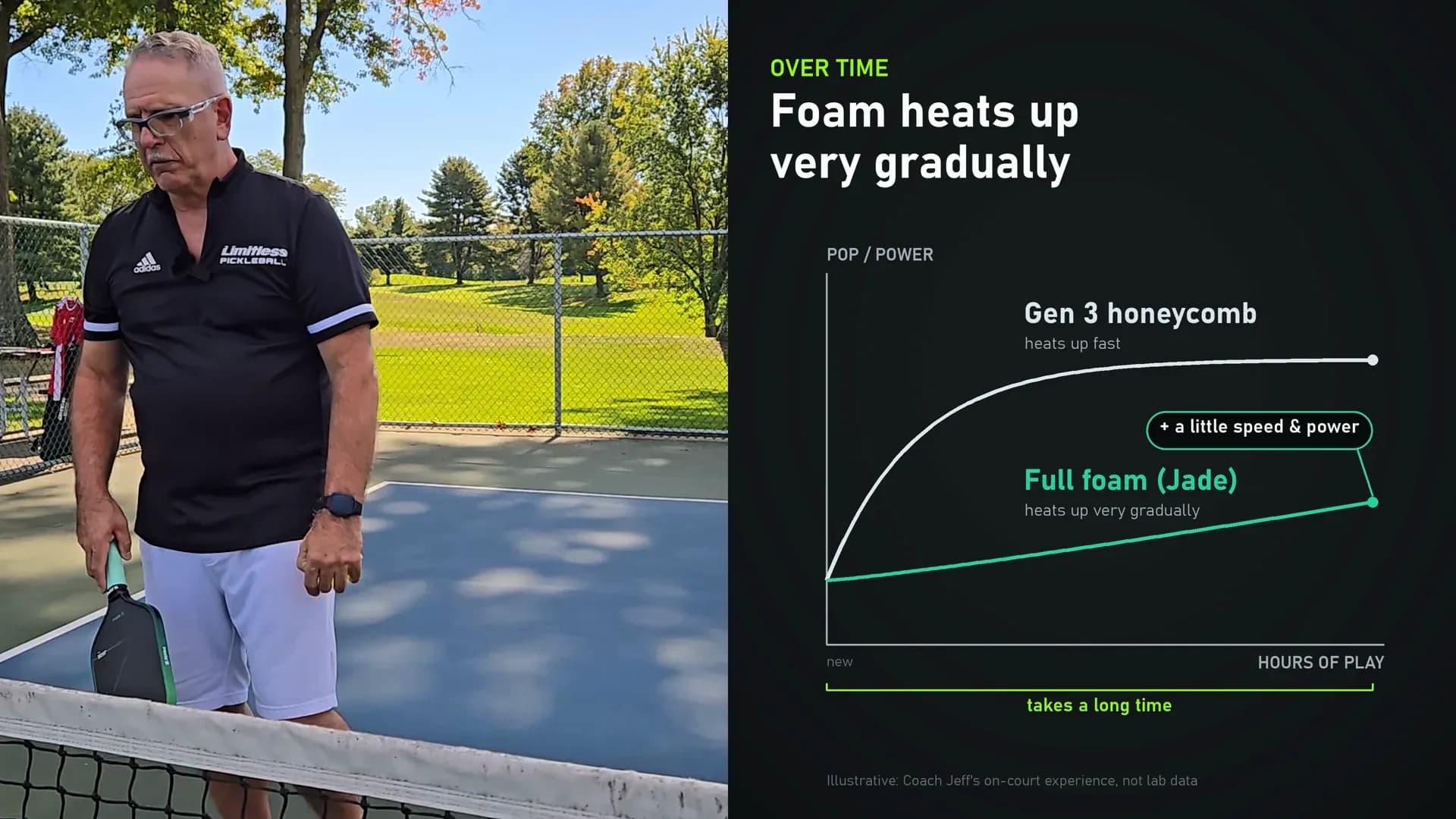
Gen 3 paddles tend to heat up over time. They get harder and pick up speed. Foam paddles heat up too, but very gradually, and it takes a long time to happen. So the Jade you buy today should play close to the Jade you’re hitting months from now.
The spin test
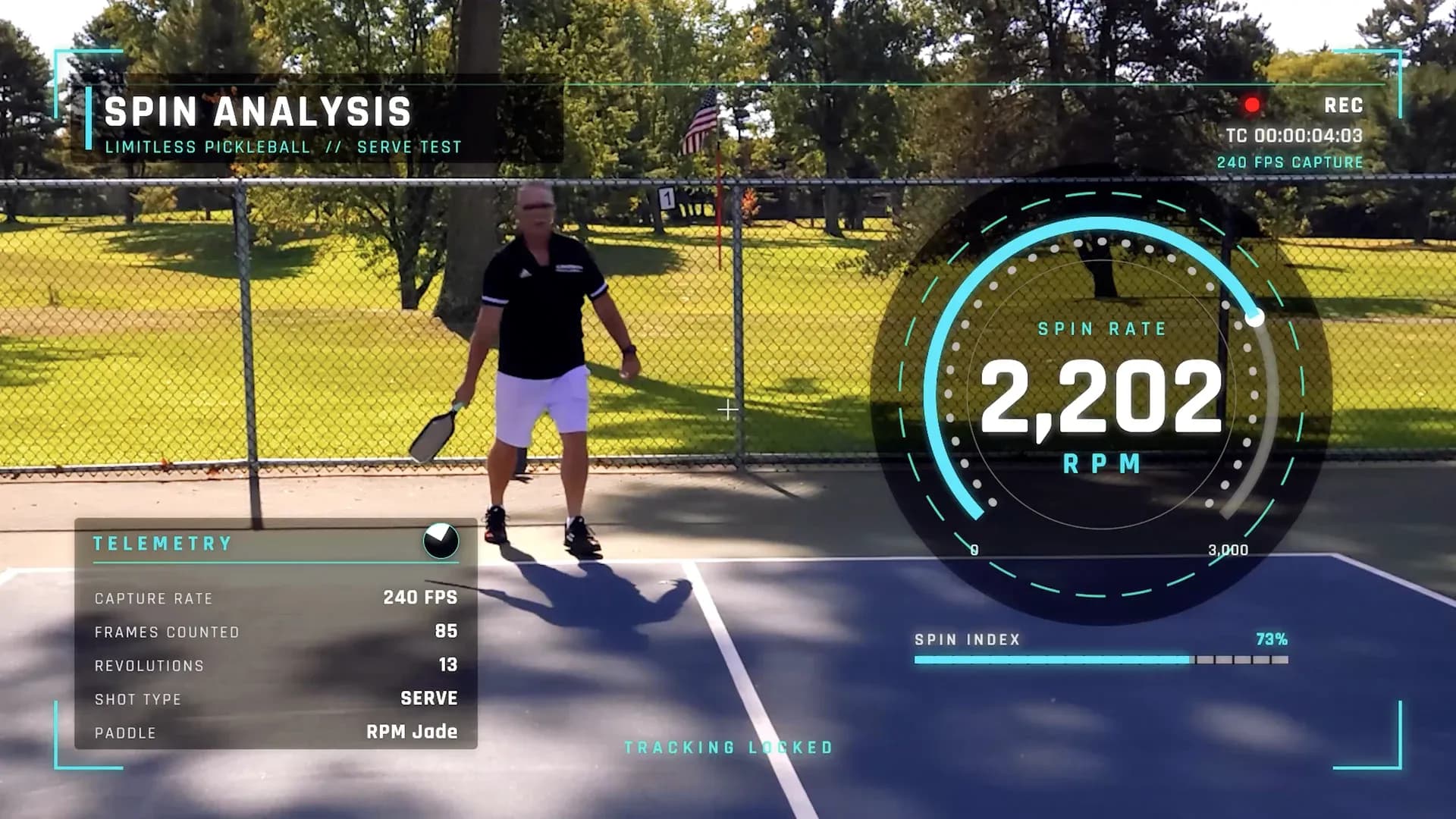
Then we took the Jade to the court with our spin camera on serves. The ball was going over the net and just diving. Our spin HUD clocked the Jade serves between 2,133 and 2,202 RPM.
For context, a brand-new Six Zero Coral Pro averaged 2,164 RPM on serves with the same camera in our Coral Pro spin test, so the Jade is right in that neighborhood. Our numbers are only meant to be compared with our own tests, since every spin rig measures a little differently.
I also noticed something playing against some really good players. They’d put the paddle down to block and the ball was actually staying underneath their paddle. It was accelerating that much because of the spin I could get on the Jade.
If I had to give one the nod for spin, it’s the Jade, because of the dwell time. The ball stays on the face longer than it does on the Q2. We didn’t run the Q2 through the spin camera for this video, so that call comes from my time on the court, not a head-to-head RPM number.
The grit, up close
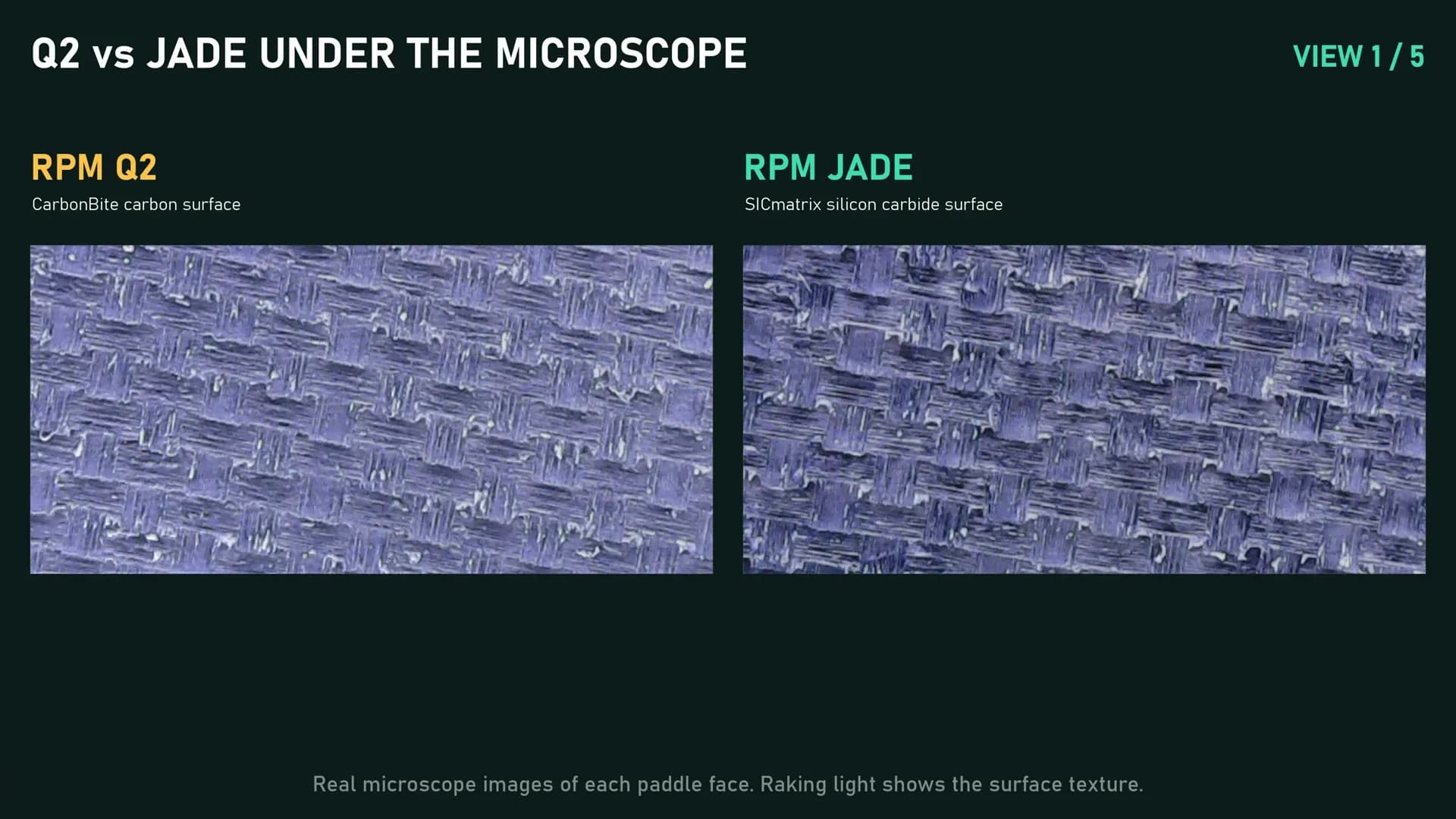
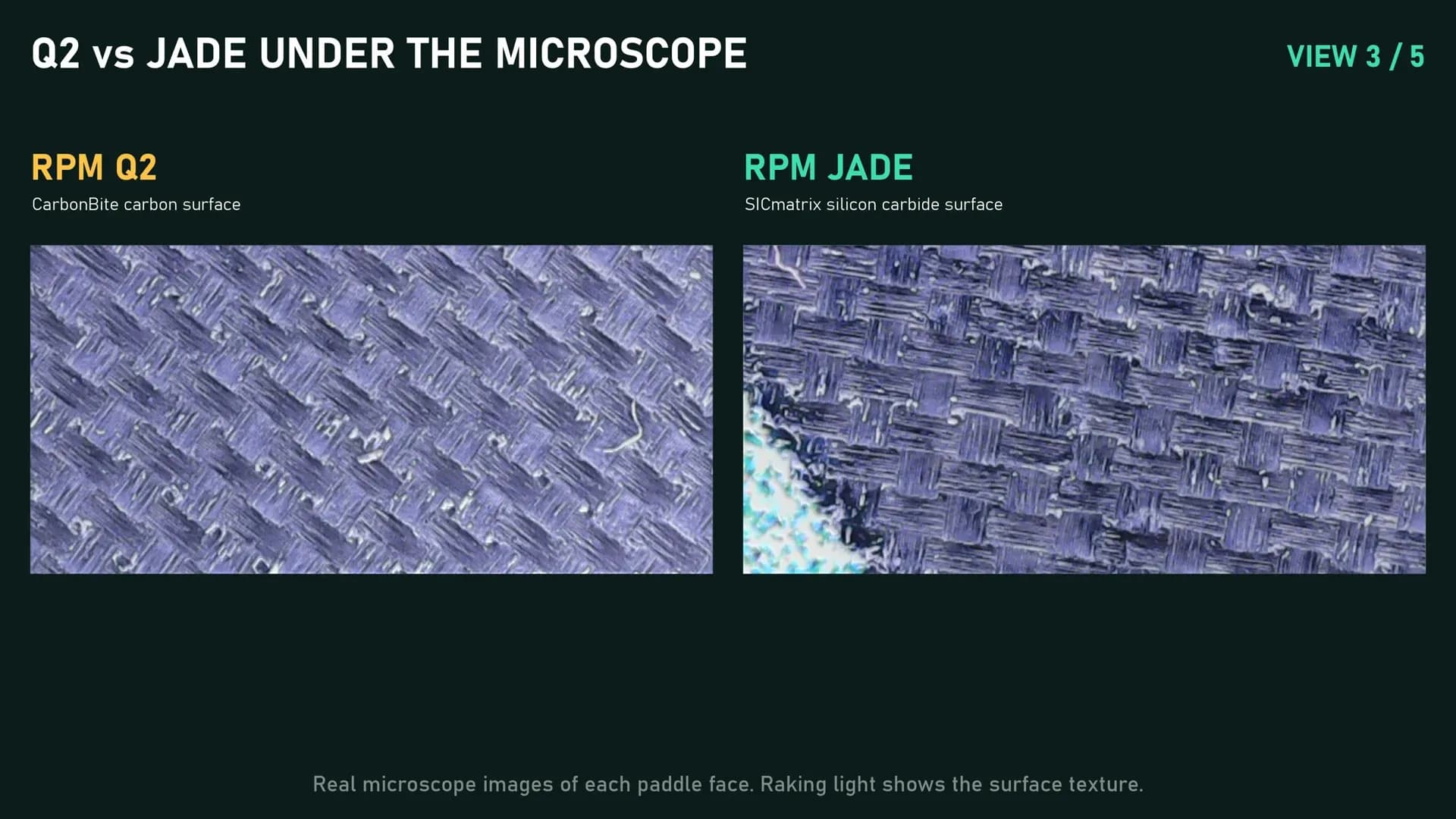
The Q2 has RPM’s CarbonBite carbon surface, which was the best they could build when the Q2 came out about a year ago. The Jade has a silicon carbide surface, which is newer technology.
You can’t say anything is going to last forever. But this surface is really, really designed to last a long time. You’re paying about $20 more for the Jade, but you’re probably going to keep it longer because of the newer tech and the grittier surface.
Get the RPM Jade or Q2 for less
Use our link for an extra 15% off either paddle, then enter code COACHJEFF at checkout. This is an affiliate link, which may earn us a commission at no extra cost to you.
Get the RPM DiscountWhere to add weight on the Jade
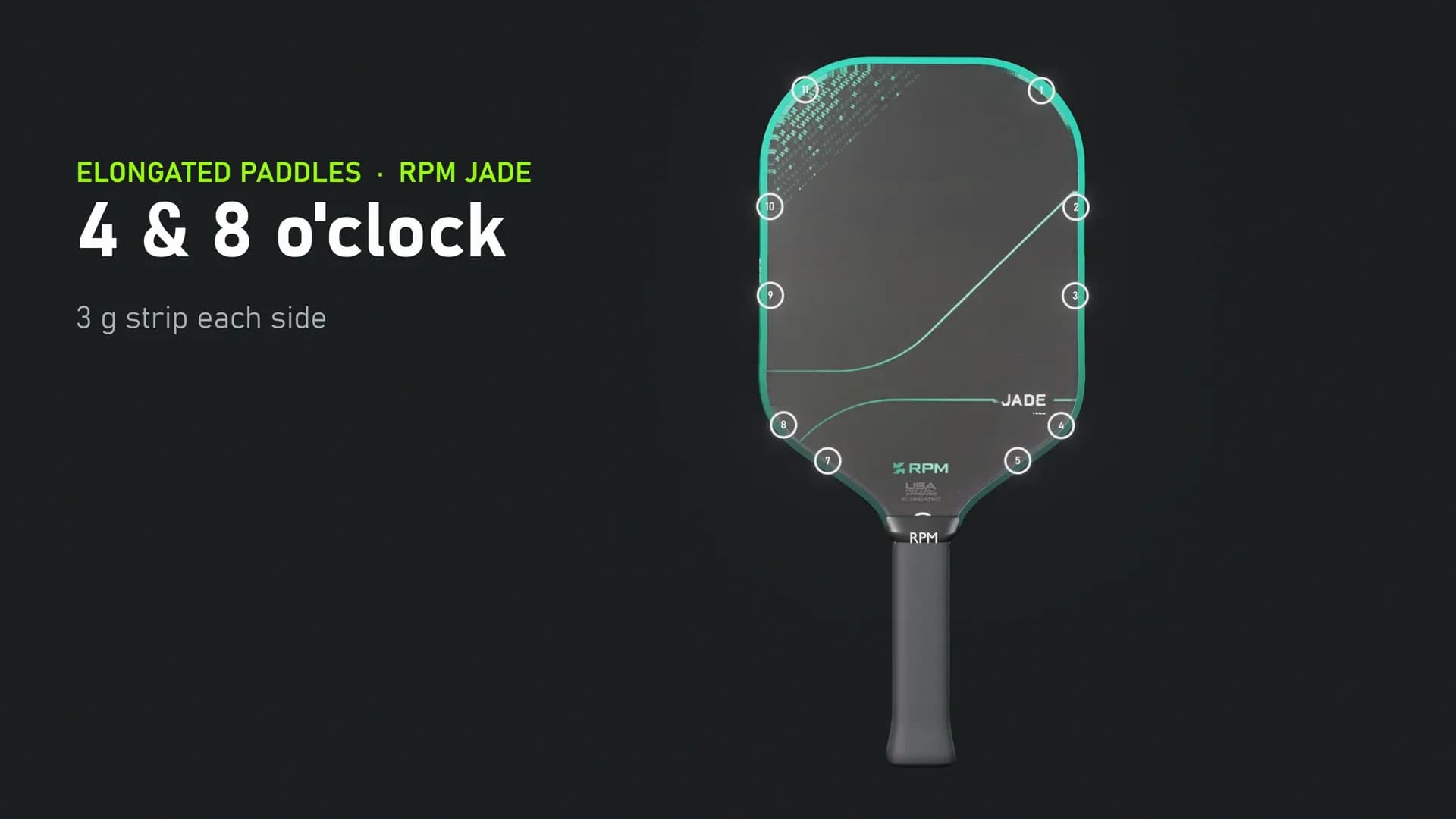
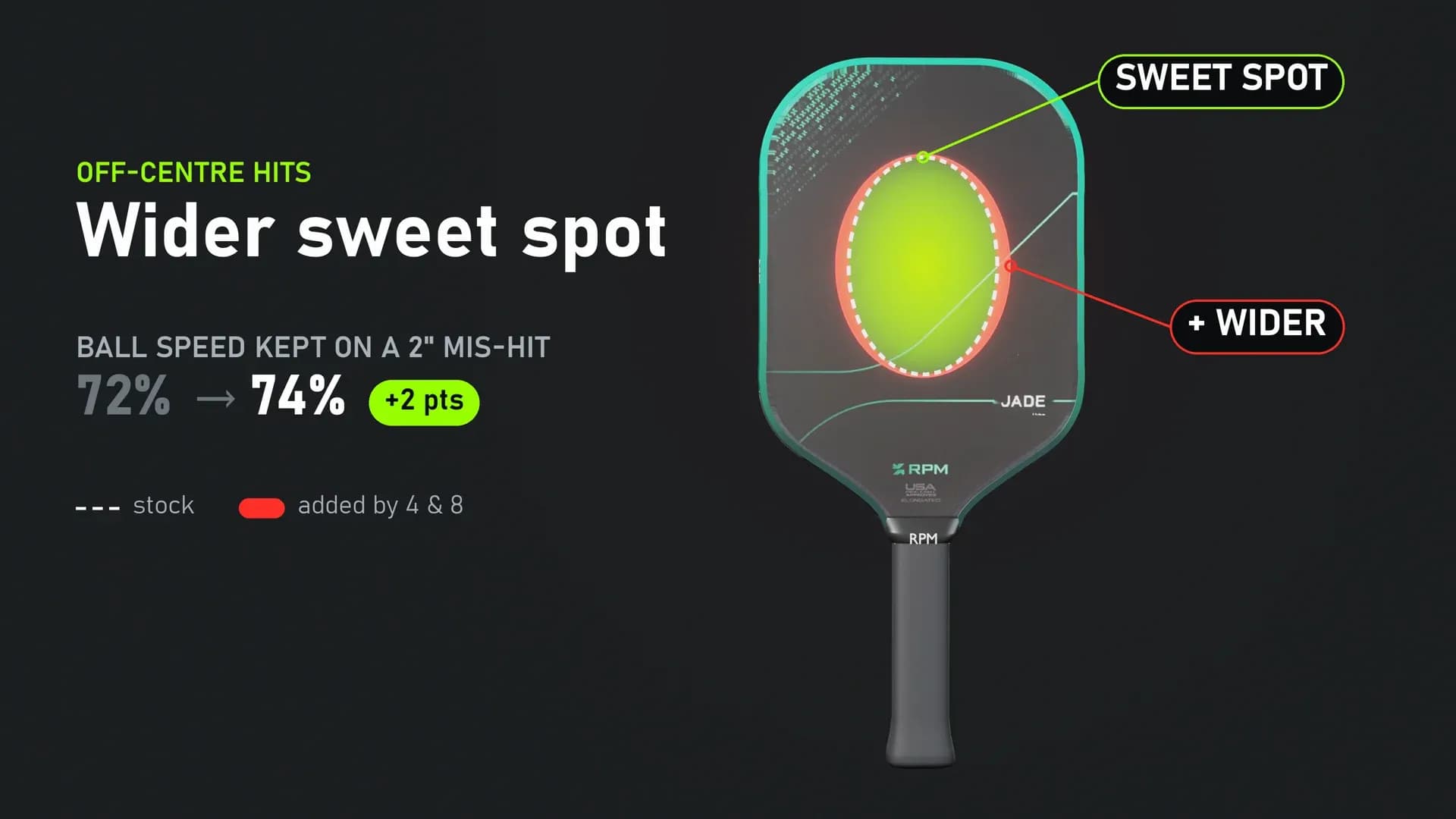
People ask me all the time where they should add weight to the Jade, or to any elongated paddle. I like to put it at 4 and 8 o’clock, right about where the curve comes into the lower neck of the paddle.
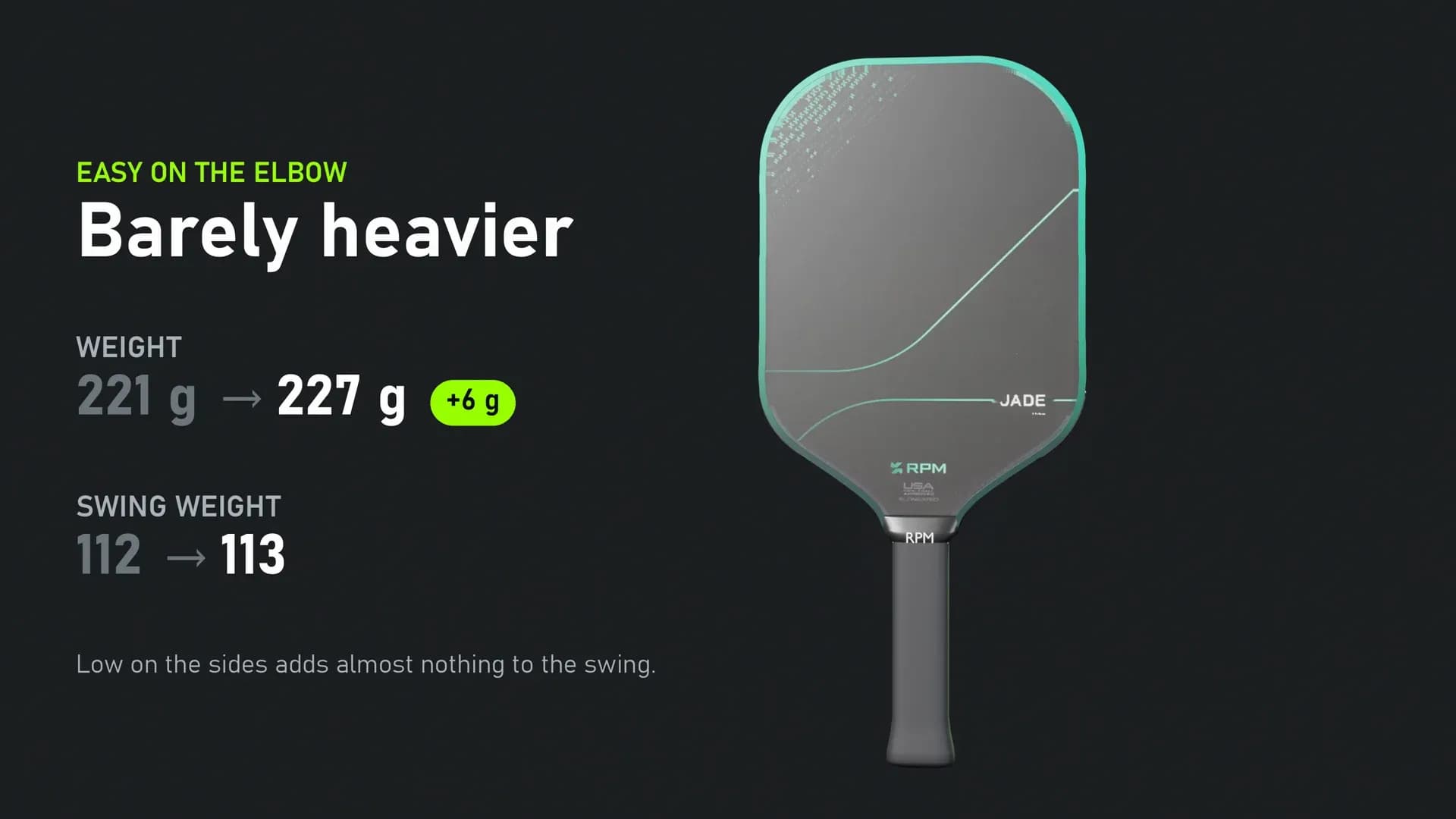
That spot widens your sweet spot and bumps your twist weight, which gives you a better chance at successful off-center returns, without adding much to the overall weight. Low on the sides adds almost nothing to the swing.
Want to try it on your own paddle first? We built a free paddle weights calculator. Pick your paddle model and where you place the weight, and it shows you the change in power, twist weight and swing weight. It’s totally free to use.
Final verdict: RPM Jade or RPM Q2?
To capsulize all of this... if you’re looking for power, I would choose the Q2. If you’re looking for better touch, better resets, better dinking, or you have a slightly softer game and you want to keep that going, I would go with the RPM Jade.
Remember... the best paddle is the one that fits YOUR game. Whichever one you pick, try it out on a few drills before you judge it. Your hands need a session or two to figure out a new paddle.
Try the RPM Jade or Q2
Check current price and availability through our discount link and use code COACHJEFF for an extra 15% off.
Shop RPM with Code COACHJEFF