Can the Cold Destroy Your Pickleball Paddle? Heat Is the Real Risk
The short answer
You left your paddle in the car overnight and it got down to 28°F. Did you just ruin it? No. A cold foam paddle plays firmer, and that goes away once it warms back up. We couldn’t find any test or material data showing that a cold night does permanent damage.
Heat is the one that can hurt it for good. A car parked in the sun, a dashboard, or a heater vent gets hot enough to go after the softer foam and the glue that holds the face to the core. So the worst thing you can do on a cold morning is try to help your paddle by warming it on the defrost vent.
Bottom line? Cold is temporary. Heat can be permanent.
How we know: we didn’t test any of this ourselves. No freezer, no heat gun, no paddle on a dashboard. Everything below comes from published studies, material data sheets, brand warranty pages and some math of our own, and I’ll tell you which is which. The numbers in brackets point to the sources at the bottom.
Quick disclosure: we’re affiliates for Friday, RPM and Six Zero. Their paddles are the examples in this post, and our discount links are near the bottom. That doesn’t change what the data says.
What’s inside a foam-core paddle
Two years ago, hardly anybody was selling a full-foam paddle. One catalogue of about 600 paddle listings shows foam as the stated core in none of the 2024 models and 82.9% of the 2026 models. [12]
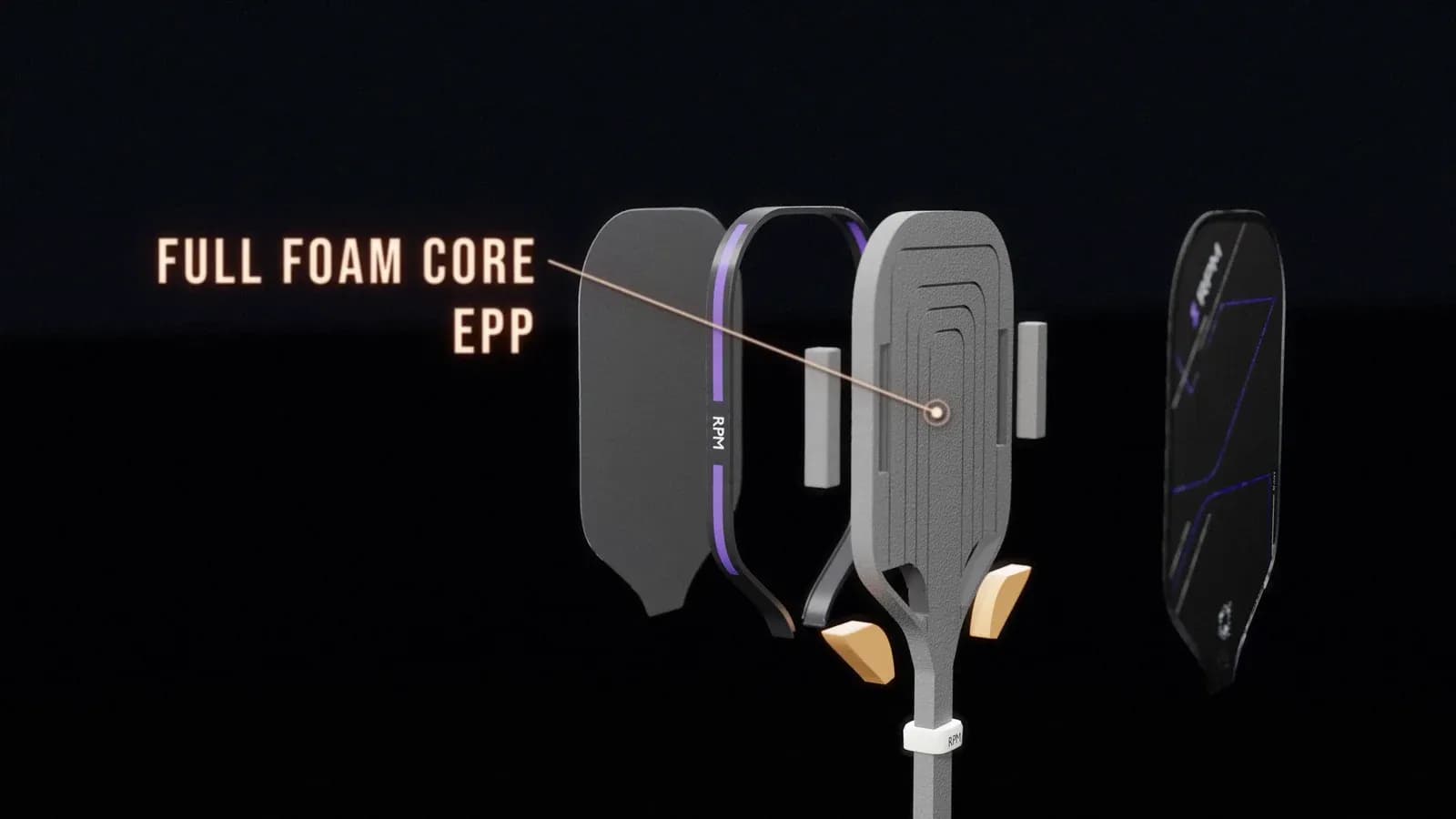
Take the RPM Q2. It’s two carbon faces glued to a solid block of EPP, which stands for expanded polypropylene. The RPM Jade uses MPP, microcellular polypropylene. The older honeycomb cores, like the one in the Friday Fever 102, are polypropylene too. [19] (We compared those two RPMs in our Jade vs Q2 review.)
So for a lot of paddles out there right now, the question is really this: what does cold do to polypropylene, and to the glue that holds a carbon face onto it?
What cold does to the foam
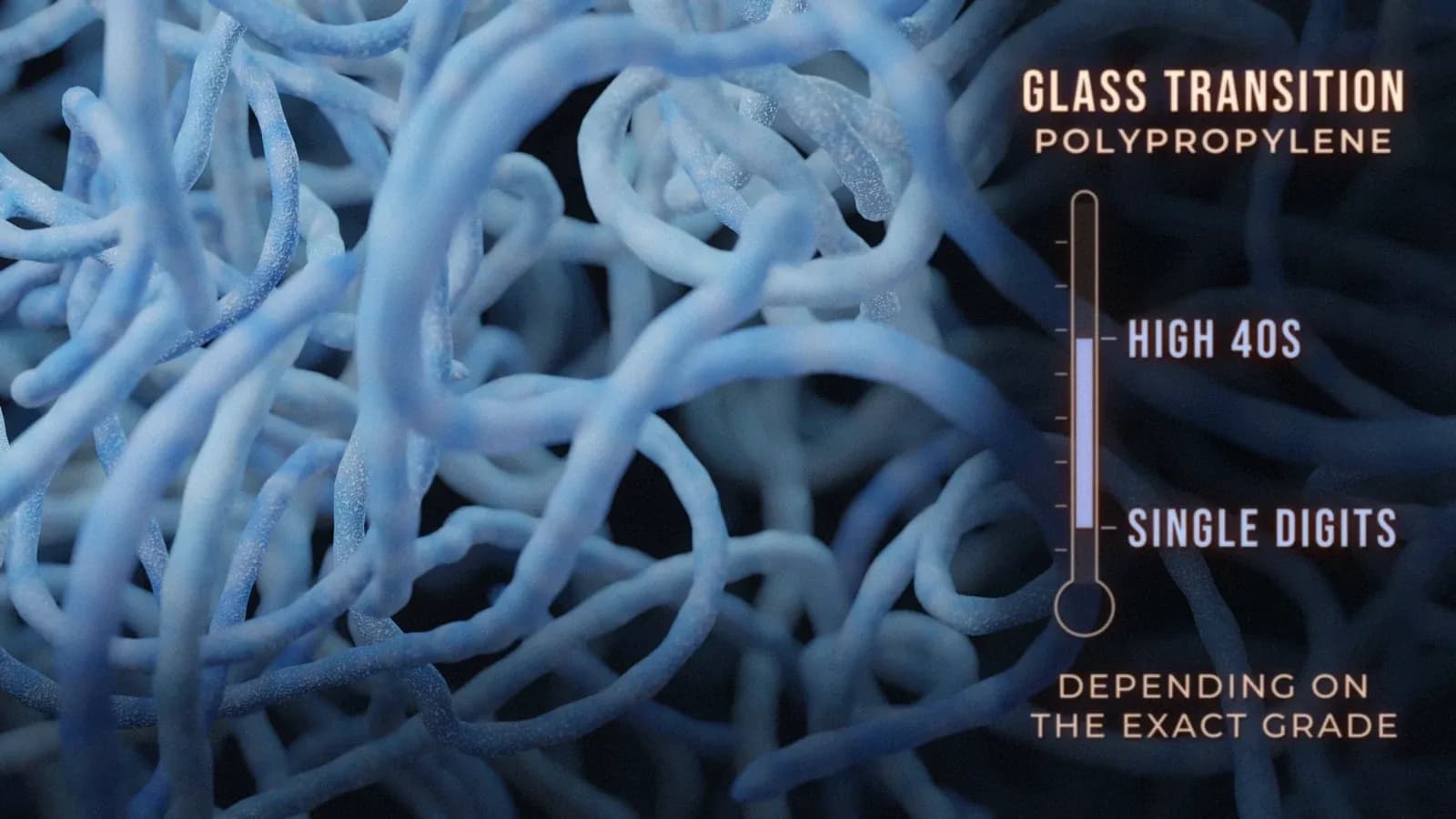
Plastic is made of long chains of molecules. When it’s warm, those chains slide past each other. MIT’s engineering school compares it to a bowl of just-cooked spaghetti coated in olive oil. Cool it down and the chains stop sliding, and the plastic goes from rubbery to stiff. Engineers call that point the glass transition. [1]
Here’s the part that matters for us. For polypropylene, that point sits right in pickleball weather. MIT puts it between -4 and 32°F. [1] One lab that measured three different grades got about 47°F, 23°F and 6°F. [2] Same plastic family, very different numbers, and paddle brands don’t tell you which grade is in your core.
It also depends on how fast you hit it. The faster a plastic gets squeezed, the higher that temperature goes. [3] A ball comes off the paddle in a blink, so on a hard drive the core probably acts a little colder than the thermometer says. That’s our read of the physics. Nobody has measured it on a paddle.
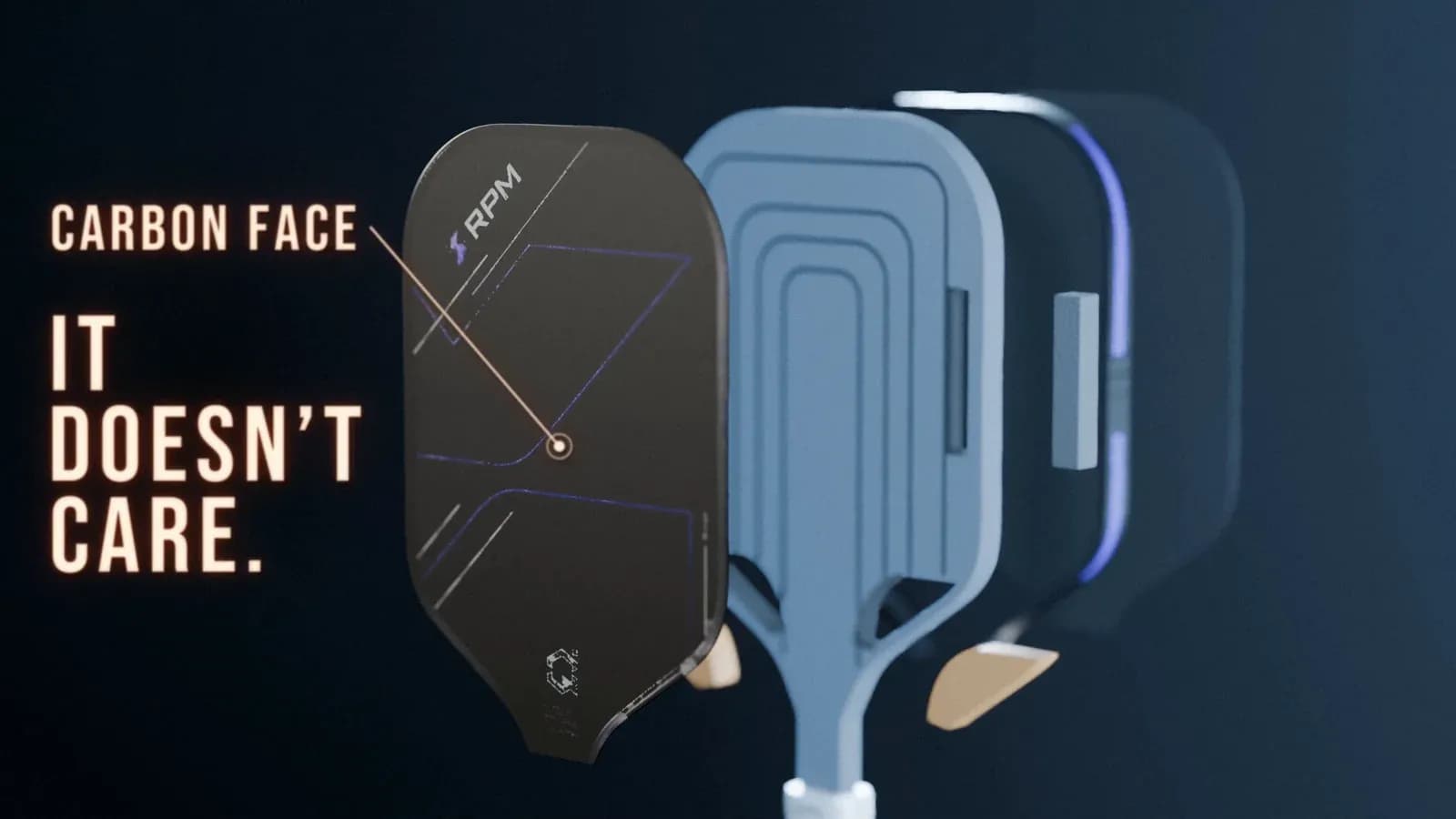
The carbon face is a different story. A shoe lab that puts running shoes in a 0°F freezer found carbon plates “do not suffer from cold weather.” [6] And the resin in a carbon face is the kind that sets once and stays set. Pickleball Science says that’s why a paddle face won’t soften in the hot sun or go brittle in a cold trunk. [7] So in the cold, it’s the core that changes, not the face.
How much firmer?
Nobody has published that number for a pickleball paddle. The closest thing we found is a study on the EPP foam used in cars. At -22°F it took 110% more force to start crushing it than at room temperature. [4]
But that’s car foam, not paddle foam, and it’s a whole lot colder than any morning you’ll play in. Firmer? Yes. Twice as firm at 35°F? No.
Running shoes tell you how much the type of foam matters. After 20 minutes in a 0°F freezer, standard shoe foams lost 31 to 47% of their softness. The premium foams lost 2 to 8%. [5][6] Shoe brands tell you which foam you’re getting. Paddle brands mostly don’t.
Does it come back? Yes
This is the part I’d want to know if it were my paddle. And everything we found says the firmness goes away when the cold does.
A foam maker’s technical sheet on low temperatures lists the effects as changes in stiffness and “temporary dimension changes.” [8] The lab that tests paddles for the pro tours treats it the same way. The head of the pros’ equipment body says that when a paddle shows up cold, the testers wait until it’s back to room temperature and then test it. [9]
We looked for a test, or any material data, showing that cold storage permanently changes a paddle. We didn’t find one.
One caveat. Plastic is less forgiving while it’s cold. MIT’s own example is plastic that gets “shatter-prone on a winter day.” [1] So if your paddle is truly frozen, let it warm up before you start swinging hard.
How long does a cold paddle take to warm up?
Most of you keep the paddle in the car and then play indoors. Nobody has timed a paddle warming up, so we ran the math. Out of its cover, it’s back near room temperature in about 10 minutes. Zipped up in the cover, more like 25. [22]
So when you walk in, the first thing to do is take the paddle out of the bag.
On a cold court, it’s mostly the ball
Now, if you’re one of the brave ones playing outside in the cold, your paddle never gets that 10 minutes. But something else on the court changed more than your paddle did. The ball.
Pickleball Science squeezed balls at cold, room and hot temperatures. For one popular outdoor ball, the stiffness when hot was about half of what it was at room temperature, and about a third of what it was cold. [10] Work that out and the cold ball is about one and a half times as stiff as the same ball at room temperature.
Then there’s you. I see this all the time: cold hands squeeze the handle harder, and a tight grip makes everything come off the paddle hot. That one’s from coaching, not from a study.
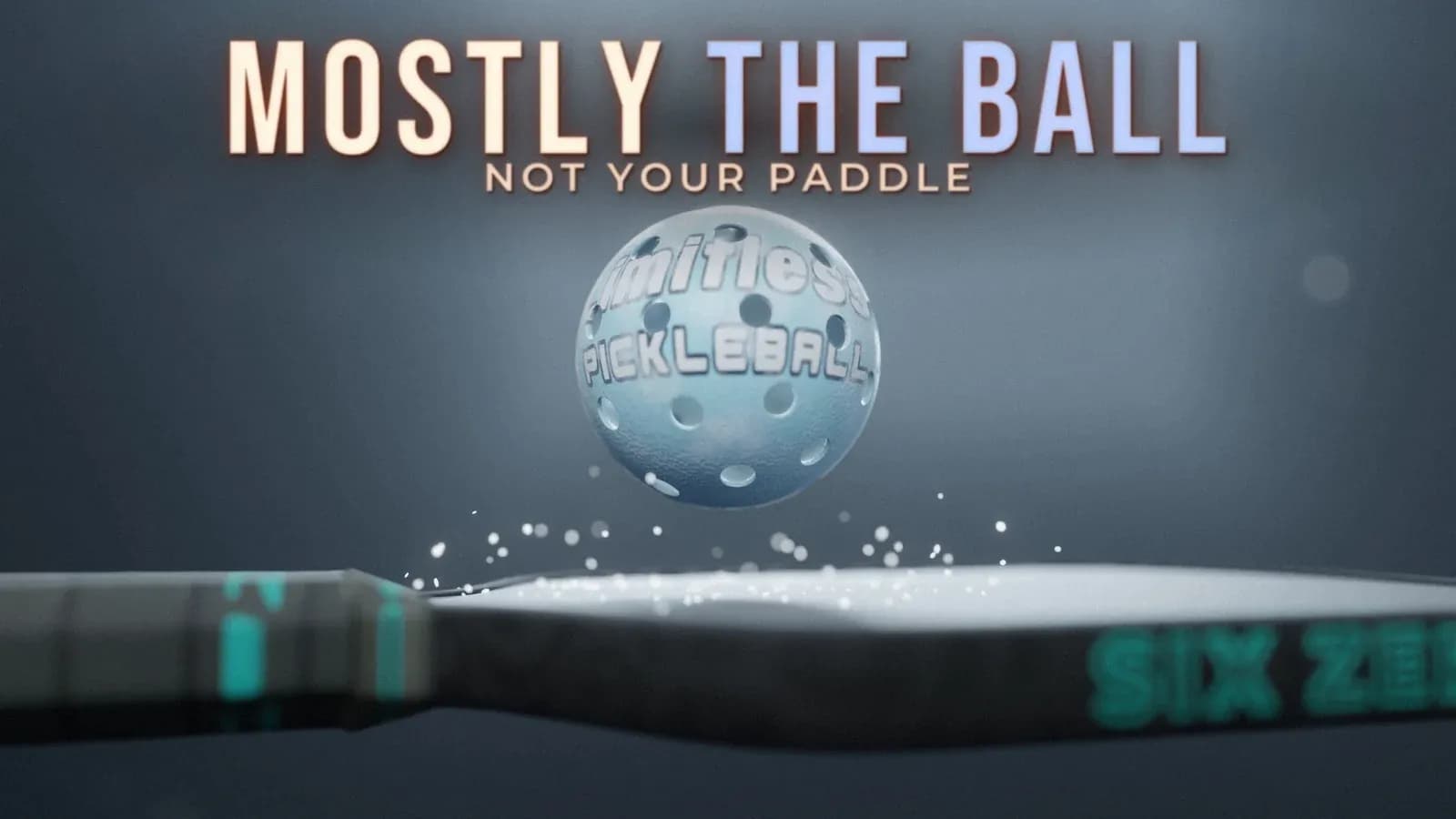
So here’s how I’d rank it on a cold day. The ball changed the most. Your grip is second. The paddle is third. Your paddle isn’t broken. It’s just cold.
Heat is the one that does damage
Okay, now the other direction, and this is the one to worry about.
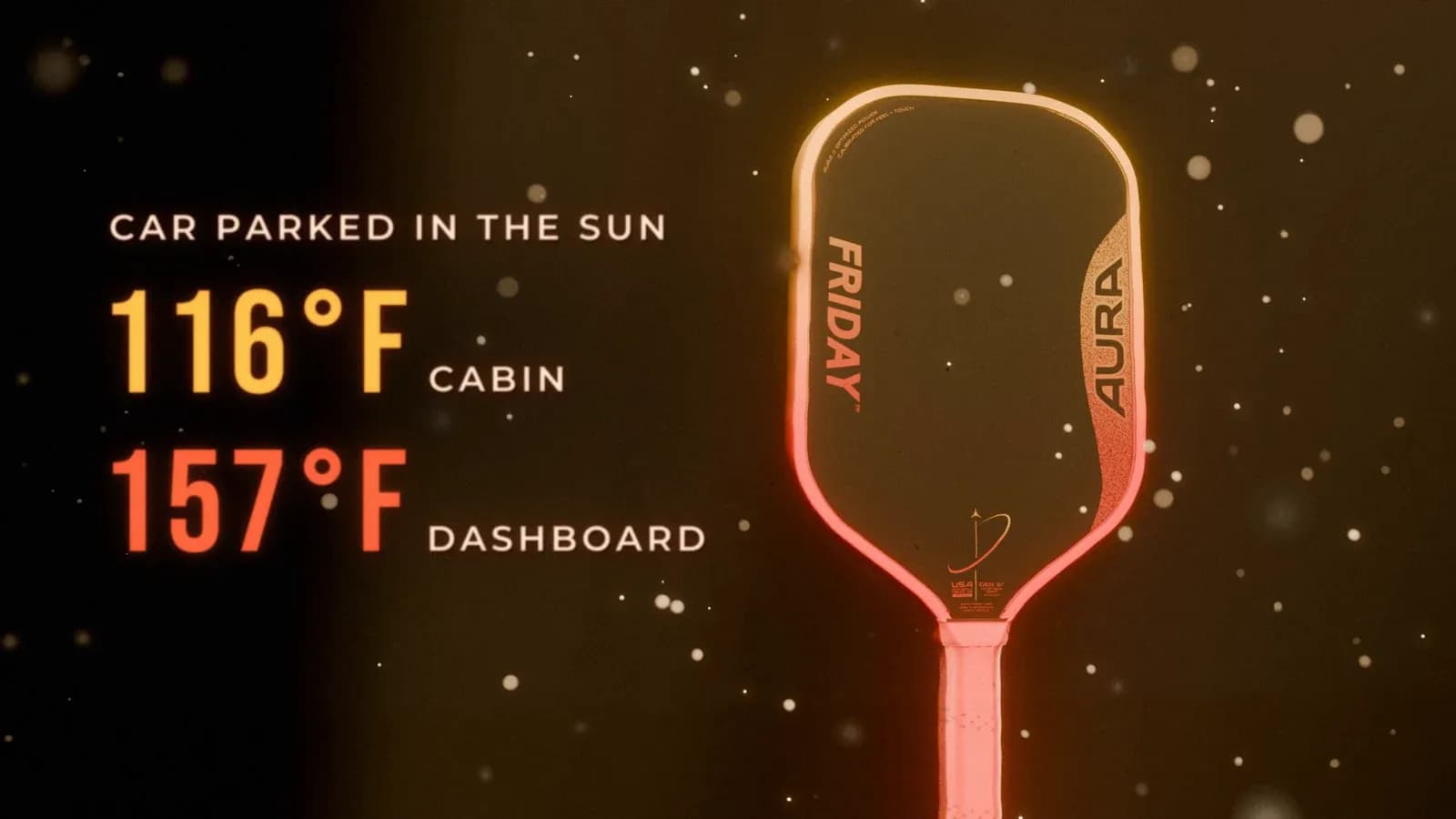
Arizona State researchers parked cars in the summer sun. After one hour the cabin air averaged 116°F, and the dashboards averaged 157°F. [11]
The foam block itself can take that. One EPP maker says its foam is good for 10 years at a steady 140°F. [13] And the carbon face isn’t going to melt.
The trouble is everything in between. Some paddles use a softer foam called EVA in the build. RPM’s own materials page calls it the softest of the common paddle foams. [19] The only published softening range we’ve seen for it starts at about 110°F, which is below that 116°F cabin. [12]
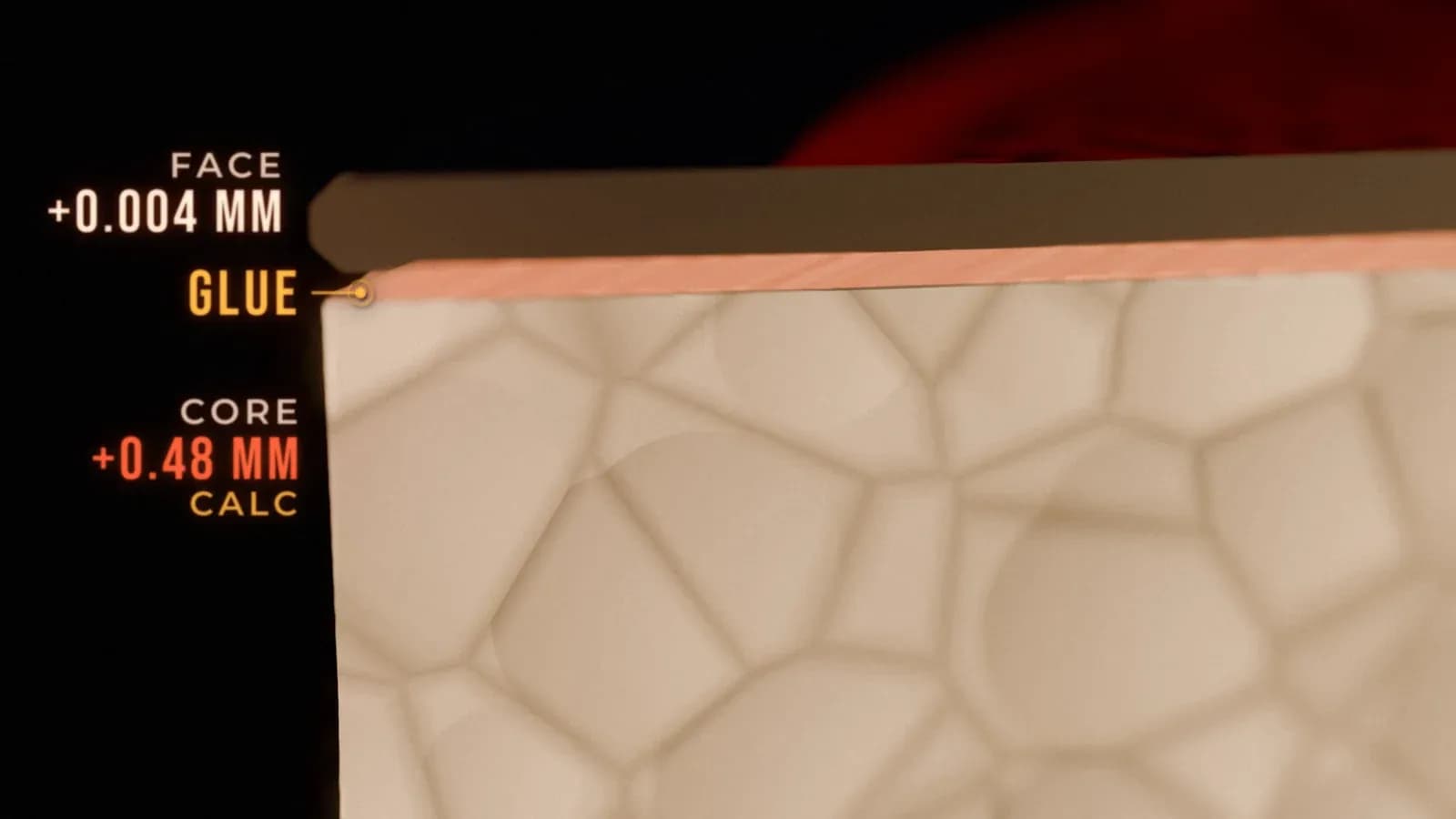
Then there’s the glue. Heat makes the foam core want to grow, and it barely moves the carbon. One analysis ran the numbers for a paddle going from room temperature to a hot car. The core wants to get about half a millimeter longer (0.48 mm). The carbon face moves 0.004 mm, and it actually shrinks. [12] That’s arithmetic from data sheets, not a measurement. But the face and the core are glued together, so all of that pulling lands on the glue line.
And we couldn’t find one paddle brand that publishes how much heat its glue can take.
Don’t warm your paddle on the defrost vent
I know what some of you are thinking. “Coach, I’ll just warm it up on the drive. Prop it on the dash, get the defrost going, and it’ll be nice and toasty by the time I pull in.”
Please don’t. A heating and air conditioning trade group had its staff put thermometers in their dash vents with the heat on max. The five healthy cars read 140 to 160°F. [14] One factory service manual sets the passing mark for heater output anywhere from 110 to 150°F, depending on how cold it is outside. [15] That’s as hot as the dashboard in that Arizona study.
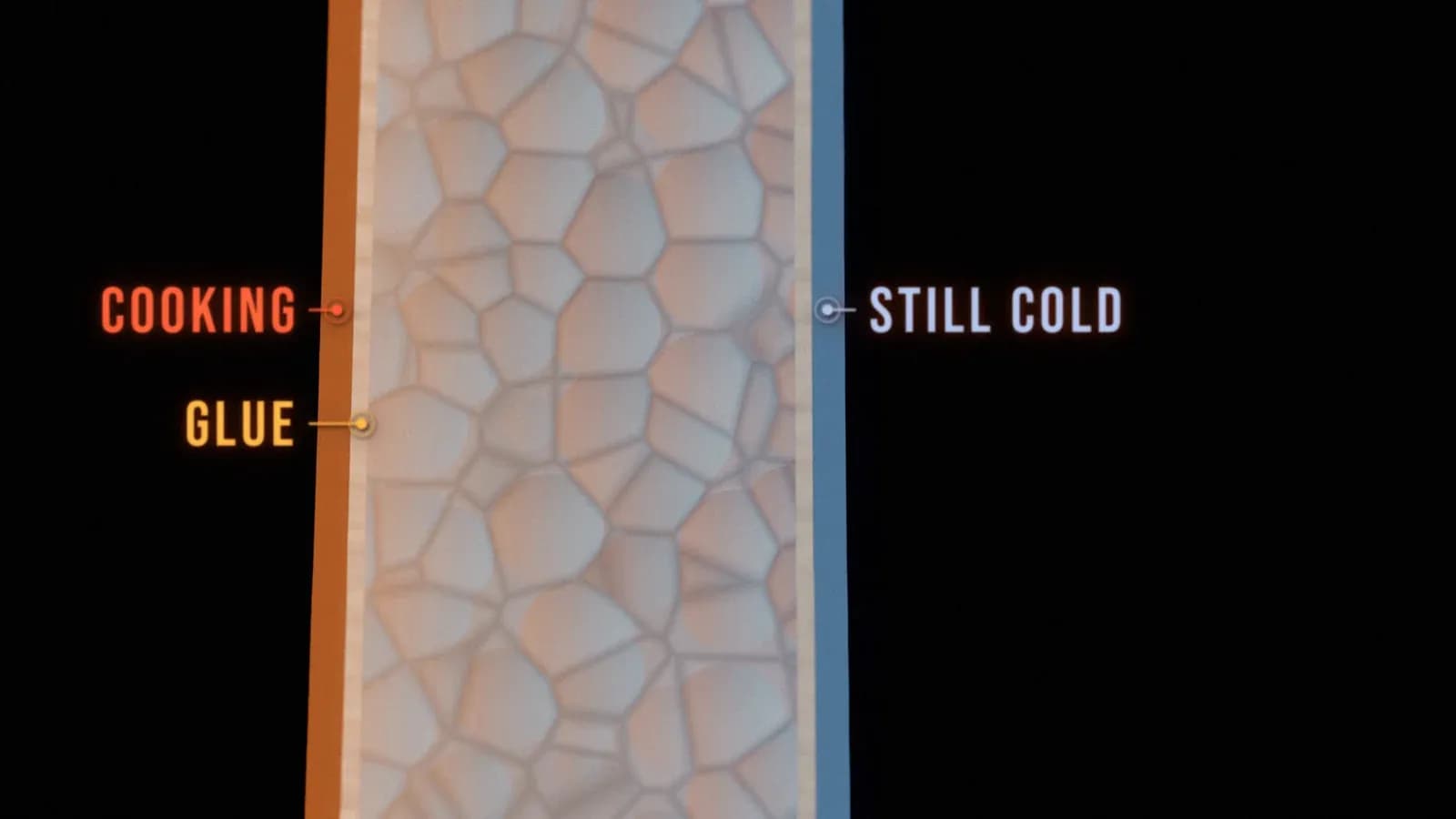
We ran the math on a paddle sitting in front of that vent. With a warm engine, the side facing the vent gets past 120°F in a couple of minutes. From a cold start it takes about 10. [22] And the far side of the paddle is still cold. So one face is trying to grow, the other isn’t, and the glue is stuck in the middle.
Again, that’s a calculation. Nobody has measured a paddle on a vent, and we didn’t either. But think about the trade you’d be making. The cold fixes itself in 10 minutes. Heat damage doesn’t fix itself at all.
What the warranties say
A lot of the worry about cold comes from warranties, so we read them. Six Zero’s warranty excludes:
“Use of paddle in temperatures below 40F or 5°C.” [16]
Their FAQ adds that temperatures above 100°F “are not ideal and may damage the paddle,” and tells you to take your paddle out of the car when you get home. [17] That’s good advice.
Six Zero isn’t alone. On November 11, 2026 we read the warranty, return and FAQ pages of 81 paddle brands. [21] Here’s what we counted:
- 24 brands give a temperature. Almost all of them say 40°F. Seven use the same sentence as Six Zero, word for word.
- 19 mention heat, cold or “extreme temperatures” without a number.
- 31 say nothing about temperature at all. Friday’s warranty is one of those.
- Only 6 put a number on heat. Two of those say 120°F and name the car. One reads: “below 40°F or above 120°F, including storage in a vehicle.”
RPM’s warranty doesn’t give a temperature. It excludes “damage from improper storage.” [18]
A couple of brands explain the 40°F line by saying a cold paddle is “more brittle and likely to break or crack.” None of the pages we read shows a test behind it. And a separate review of 14 big-brand warranties found that not one of them sets a heat limit. [12]
So here’s the practical side. If your brand has that 40°F line and your paddle cracks on a 35°F morning, they’ve already told you in writing that it isn’t covered. That’s a warranty rule. It isn’t proof that cold storage ruins paddles.
Three rules for cold weather
That’s it... that’s the answer. Here’s what I’d do with it.
Why not bother warming the paddle for an outdoor game? Because it won’t last. By our math, a room-temperature paddle on a 38°F court is back down near the air temperature in about 5 minutes. [22]
The paddles in this post, and our discounts
The paddles I used as examples are from Friday, RPM and Six Zero. We’re affiliates for all three, so you get a discount with our links and codes. Here they are in one place.
$10 off a Friday Aura or Aura Pro
Use our link and code JEFF59118 for $10 off a Friday Aura or Aura Pro. This is an affiliate link, which may earn us a commission at no extra cost to you. Price, stock and discount terms can change.
Shop Friday with Code JEFF5911815% off RPM
Use our link and code COACHJEFF for 15% off RPM paddles, including the Q2 and the Jade. This is an affiliate link, which may earn us a commission at no extra cost to you. Price, stock and discount terms can change.
Shop RPM with Code COACHJEFF10% off Six Zero
Our link takes 10% off Six Zero. If the checkout asks for a code, it is COACHJEFF10. This is an affiliate link, which may earn us a commission at no extra cost to you. Price, stock and discount terms can change.
Shop Six Zero for 10% OffCold paddle FAQ
Can I leave my pickleball paddle in the car overnight in winter?
It’ll play firmer until it warms up, and we found no evidence that a cold night does permanent damage. I’d still bring it inside. It’s a good habit for summer, when the car is the real danger, and some warranties don’t cover a paddle that’s been used below 40°F.
Can a hot car damage a pickleball paddle?
Yes, that’s the real risk. A car parked in the sun averaged 116°F in the cabin and 157°F on the dashboard in one study. [11] That’s above where softer paddle foam starts to soften, [12] and it puts stress on the glue between the face and the core.
Is it safe to play pickleball below 40°F?
Plenty of people do. Just know that plastic is less forgiving when it’s cold, [1] and that 24 of the 81 brands we read put a temperature in their warranty, almost always 40°F. [21] Check yours before you play in the cold.
How long should a cold paddle warm up before I play?
About 10 minutes out of its cover at room temperature, or about 25 if it stays zipped up. That’s by our math, not a measurement. [22]
Should I warm my paddle on the car heater?
No. Vent air on max heat runs 140 to 160°F, [14] and a vent only heats one side of the paddle. Let it warm up on its own.
Why does my paddle feel dead or harsh in the cold?
Some of it is the core firming up. More of it is the ball, which gets a lot stiffer in the cold, [10] and cold hands gripping too tight.
What nobody has published
There’s one thing nobody can tell you yet. How much does a paddle’s power really change at 40°F? Players can’t even agree on it. Some say a cold paddle has more pop. Some say it has less power.
Nobody’s published it. We looked, and we found zero published tests of an actual paddle at different temperatures.
The pros don’t have to wonder. The lab that tests their paddles keeps them at 72°F for at least four hours first, and at tournaments the testers check the paddle face with a temperature gun. [20] The head of the pros’ equipment body has said the testers know paddles test better when they’re cooler, and that heated ones have a hard time passing, [9] so temperature clearly changes something. They just haven’t published by how much.
You and me? We get whatever Saturday morning gives us. But now you know the cold wears off. Just keep it away from the heat.
So tell me in the comments on the YouTube video: where does your paddle spend the night?
Sources
Nothing in this post was tested in person by us. Every number comes from one of the sources below, and we checked that each link loaded and said what we say it does on November 14, 2026. The two entries without a link are our own work, and they’re labeled that way.
- [1] MIT School of Engineering, Ask an Engineer: “Why do plastics get brittle when they get cold?”
- [2] Alpha Technologies: “Why your polypropylene Tg might be wrong” (glass transition measured for three polypropylene grades)
- [3] NETZSCH Analyzing & Testing: glass transition measured at several frequencies (the faster the test, the higher the transition temperature)
- [4] International Journal of Mechanical and Materials Engineering (2024): “Influence of temperature on the compression properties of expanded thermoplastic polyurethane.” Its literature review reports the Morton et al. (2020) result for automotive EPP foam
- [5] RunRepeat: running shoe foams guide (softness lost after 20 minutes in the freezer, by foam type)
- [6] RunRepeat: effects of temperature on running shoes (0°F freezer procedure; carbon plates in the cold)
- [7] Pickleball Science: “Thermoformed Paddle Delamination” (thermoset carbon face sheets)
- [8] Zotefoams Technical Information Sheet TIS29: “Mechanical properties at low temperatures”
- [9] The Dink: “Cold Paddles, Hot Mic: Did Todd Fought Do Anything Wrong?” (July 3, 2024), quoting the UPA-A on paddle temperature at testing
- [10] Pickleball Science: “How Does Temperature Affect a Pickleball?”
- [11] Arizona State University News: “ASU study: Hot cars can hit deadly temperatures in as little as one hour” (May 2018)
- [12] PaddleLedger: hot-car heat damage desk analysis (October 2026): foam share of catalogue models, published foam softening range, expansion arithmetic, 14 warranties read
- [13] JSP ARPRO (expanded polypropylene): heat resistance properties data sheet
- [14] MACS (Mobile Air Climate Systems Association): “Keep a thermometer in your vent” (2014)
- [15] 1998 Chevrolet Malibu factory service manual: heater output temperature check
- [16] Six Zero: warranty and return policy
- [17] Six Zero: FAQs (paddle care)
- [18] RPM Pickleball: warranty
- [19] RPM Pickleball: materials science page (EPP, MPP, EVA and polypropylene honeycomb)
- [20] Pickle Pro Labs: Average Deflection Force test procedure (paddle conditioning and on-site temperature check)
- [21] Limitless Pickleball warranty read-through: the warranty, return and FAQ pages of 81 paddle brands, read November 11, 2026. Our own count. We report it in total and only name the brands we work with.
- [22] Limitless Pickleball calculations: warm-up, cool-down and vent heating times estimated from published material properties. These are estimates, not measurements of any paddle.